
Ferries to Bornholm
All routes compared
Sassnitz, Ystad or Køge: the three direct ferries to Bornholm compared - crossing time, frequency, ship, how pricing works and when to book.
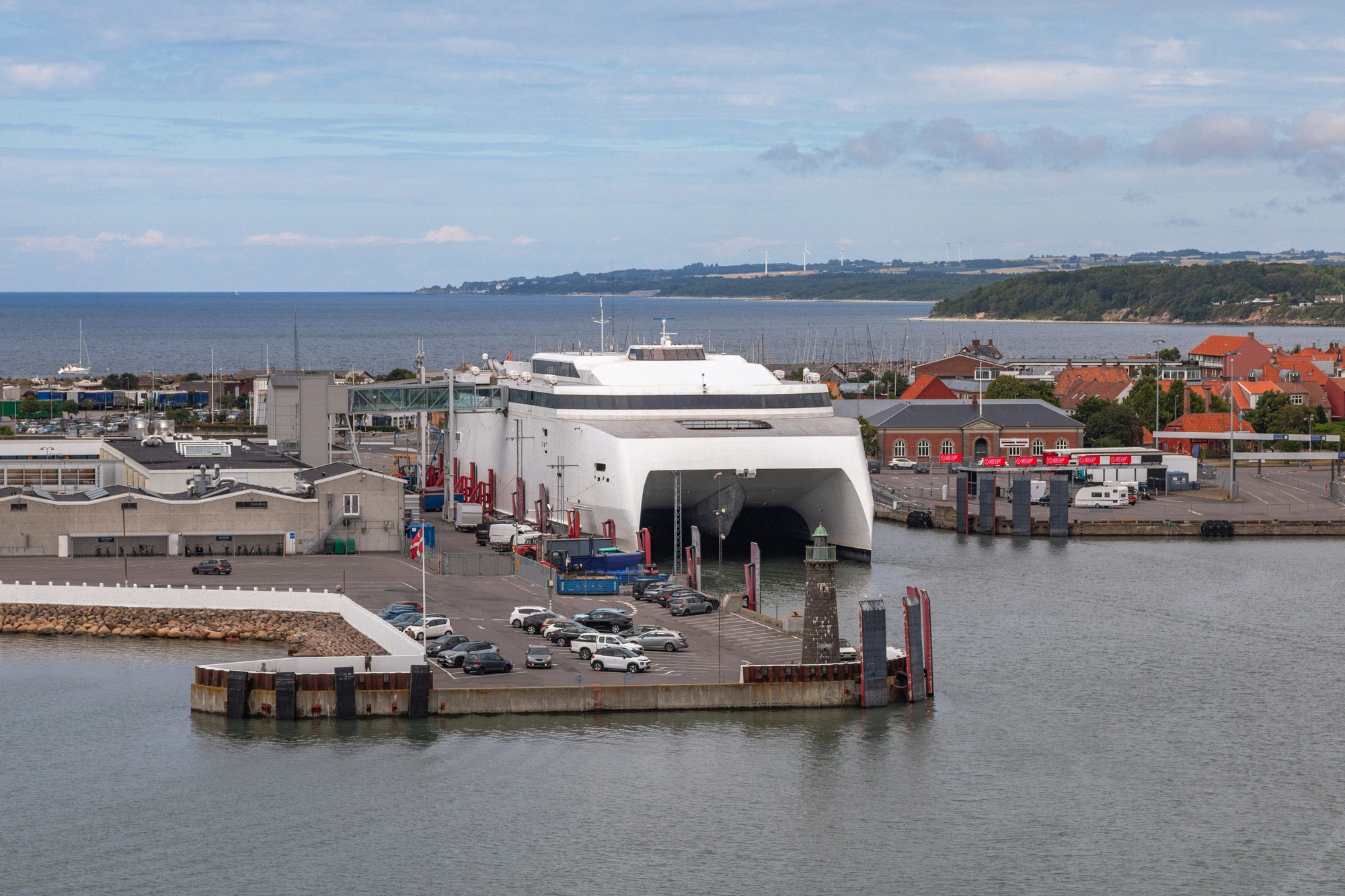
All direct ferries to Bornholm arrive at Rønne on the west coast. The three routes from Sassnitz, Ystad and Køge are all operated by Bornholmslinjen, part of the Danish shipping company Molslinjen - so there is no operator to compare, only the crossing to choose. This page compares the three routes; which mode of transport suits your trip at all, and which land route is shortest from your starting region, is covered in the guide to getting to Bornholm.
| Route | Crossing time | Frequency | Ship type | Suits |
|---|---|---|---|---|
| Ystad - Rønne | around 80 minutes | the densest service, year-round | high-speed ferry | arriving over the Øresund Bridge or by train via Malmö |
| Sassnitz/Mukran - Rønne | 3 hours 20 to 3 hours 45 | seasonal, with a winter break | car ferry M/S Hammershus, sometimes M/S Povl Anker | arriving from northern and eastern Germany without detouring through a third country |
| Køge - Rønne | around 5.5 hours | usually daily, mostly overnight | car ferry M/S Hammershus | arriving via Zealand, if you want to use the night for the sea leg |
Two things separate the routes more than crossing time alone: the reliability of the timetable - Ystad runs densely all year, Sassnitz seasonally - and the length of the land leg before it. If you want to weigh road kilometres against minutes at sea, the corridors to Zealand and southern Sweden are set out in the guide to getting to Bornholm. Poland is missing from the table for a reason: there is currently no scheduled direct ferry from there.
Please note: timetables, fares and conditions of carriage can change at short notice. The table further down loads day-specific departures; the binding schedule is always the official Bornholmslinjen timetable.
Ferry routes to Bornholm
Contents
Direct ferry: Sassnitz - Rønne
The only direct link from Germany to Bornholm runs from the ferry port of Sassnitz/Mukran on Rugen to Rønne. The scheduled crossing takes 3 hours 20 to 3 hours 45 minutes depending on the ship, skipping the detour via Denmark or Sweden.
Sailings are strongly seasonal. In high season the route runs on five to six days a week, with two sailings on peak days, and in spring and autumn on three to five days. In November and December it usually sails only on Saturdays, and in 2027 it pauses completely from early January to mid-March. Sailing days and times change from season to season, so check the timetable for your specific date first. For travellers coming from northern and eastern Germany, this route is often the most direct option. If you're arriving without a car, the guide to getting there by train covers onward transport to the Mukran terminal.
The terminal, check-in deadlines, parking at Mukran and the question of who the route suits are covered in detail on the Sassnitz - Rønne ferry page. If you are travelling from Poland, the discontinued direct link and today's alternatives are set out on Via Kołobrzeg to Bornholm.
High-speed ferry: Ystad - Rønne
The Ystad-Rønne route is the fastest link and generally the one with the most frequent departures. High-speed ferries cross the Baltic in around 80 minutes. The trade-off is the extra drive down to southern Sweden before you board.
Ystad sits on the south coast of Skåne and is well connected by road from Malmö and Trelleborg. The short crossing makes this route especially attractive if you're already travelling via Sweden. Check-in deadlines and the rules for bicycles, pets and electric vehicles are among the conditions that change, so confirm them with the operator before every trip.
Getting to Ystad, the rail connection, check-in and tips on charging electric cars are covered on the Ystad - Rønne ferry page.
Overnight ferry: Køge - Rønne
As a third direct link, Bornholmslinjen runs a ferry from Køge, south of Copenhagen. It's often used as an overnight crossing, with a scheduled sailing time of roughly 5.5 hours. If you're already travelling via Zealand, this lets you use the night for the sea crossing. Check availability and the type of cabins or reclining seats for your specific sailing during booking.
This route makes most sense if you're already heading to Bornholm via Zealand and would rather sleep through the crossing than book an extra night on land. Note that the ferry leaves after midnight and therefore carries the arrival day's date in the timetable: if you book for a Saturday, you need to be in Køge on Friday evening. Terminal opening hours, check-in and the choice between a cabin and a reclining seat are covered on the Køge - Rønne ferry page.
Timetable: departures to Rønne
Here you'll find day-specific departures for the three Bornholm routes. Choose a date and route; return sailings from Rønne are on the second tab. If nothing loads, use the operator's official timetable instead. The timetable page with the check-in deadline for each port and the seasonal pattern of the routes is at Bornholm ferry timetable.
Booking note: the "Check with Direct Ferries" buttons lead to Direct Ferries, where the price and contract are made. To check or book directly with the operator, use Bornholmslinjen.
All departures
Contents
What the crossing costs
Bornholmslinjen works with dynamic fares. A starting price is therefore not a comparison price but the cheapest case in a scale that rises with demand. Five things determine what you end up paying:
- Date and time of travel. July and August, public holidays and the Saturday changeover for holiday homes are the most expensive dates.
- How far ahead you book. Prices rise with demand. Book at short notice and you usually pay more - if there is any space left at all.
- Vehicle rather than passengers. The price depends on the length and height of your vehicle, not on how many people are in it; a motorhome costs a multiple of a car. Foot passengers pay considerably less.
- Fare type. The cheapest fare can only be changed for a fee and is non-refundable; Flex costs more and can be changed free of charge, but is not refundable either.
- Extras. A cabin or reclining seat on the overnight ferry and pet spaces are charged separately.
Because these variables shift daily, this page deliberately quotes no fixed figure. For a rough sense of how ferry, flight and train compare on price, see the guide to getting to Bornholm; the binding final price only exists for your specific booking.
Booking: when, where and what to watch
When. For travel in July and August and over public holidays, book at the same time as your accommodation - months ahead. Car spaces sell out before foot passenger spaces, and weekend sailings before weekdays.
Where. Directly with Bornholmslinjen or through a booking partner. The buttons in the timetable above lead to Direct Ferries; the price and the contract are formed there.
What to watch. Always compare the same sailing with the same vehicle and passenger details - otherwise you are comparing fares, not routes. Check the check-in deadline for your specific departure before booking: it varies by route and ship, and missing it means losing your space with no replacement. Rules for bicycles, pets and electric cars are part of the conditions of carriage and change seasonally; they live with the operator, not here.
Which route suits you?
There's no single cheapest or best route - it depends on your starting point, travel date and the day's prices. As a rough guide:
- Shortest crossing: Ystad-Rønne. At around 80 minutes, this is by far the fastest sea leg - ideal if you're already travelling via the Oresund Bridge or by train through Malmö.
- Direct from Germany: Sassnitz-Rønne. No detour via Denmark or Sweden, but a more seasonal service. Check the timetable for your date well in advance.
- Save a night on land: Køge-Rønne. Worth it if you're coming via Zealand and want to sleep through the crossing.
Think about how your travel style fits each route: on the Ystad route, the short crossing time is the main draw; on the longer Sassnitz and Køge links, comfort, space and travelling overnight may matter more. In peak holiday weeks, it's worth booking your crossing and accommodation together. Travelling with a dog? See the guide to Bornholm with dogs - the operator's current rules are always the ones that count.
Not on this page: the feeder ferries from Germany to Zealand and southern Sweden
- Puttgarden-Rødby, Rostock-Gedser, Travemünde-Malmö and the Trelleborg routes. They do not go to Bornholm; they replace road kilometres, and so they belong in the guide to getting to Bornholm.