
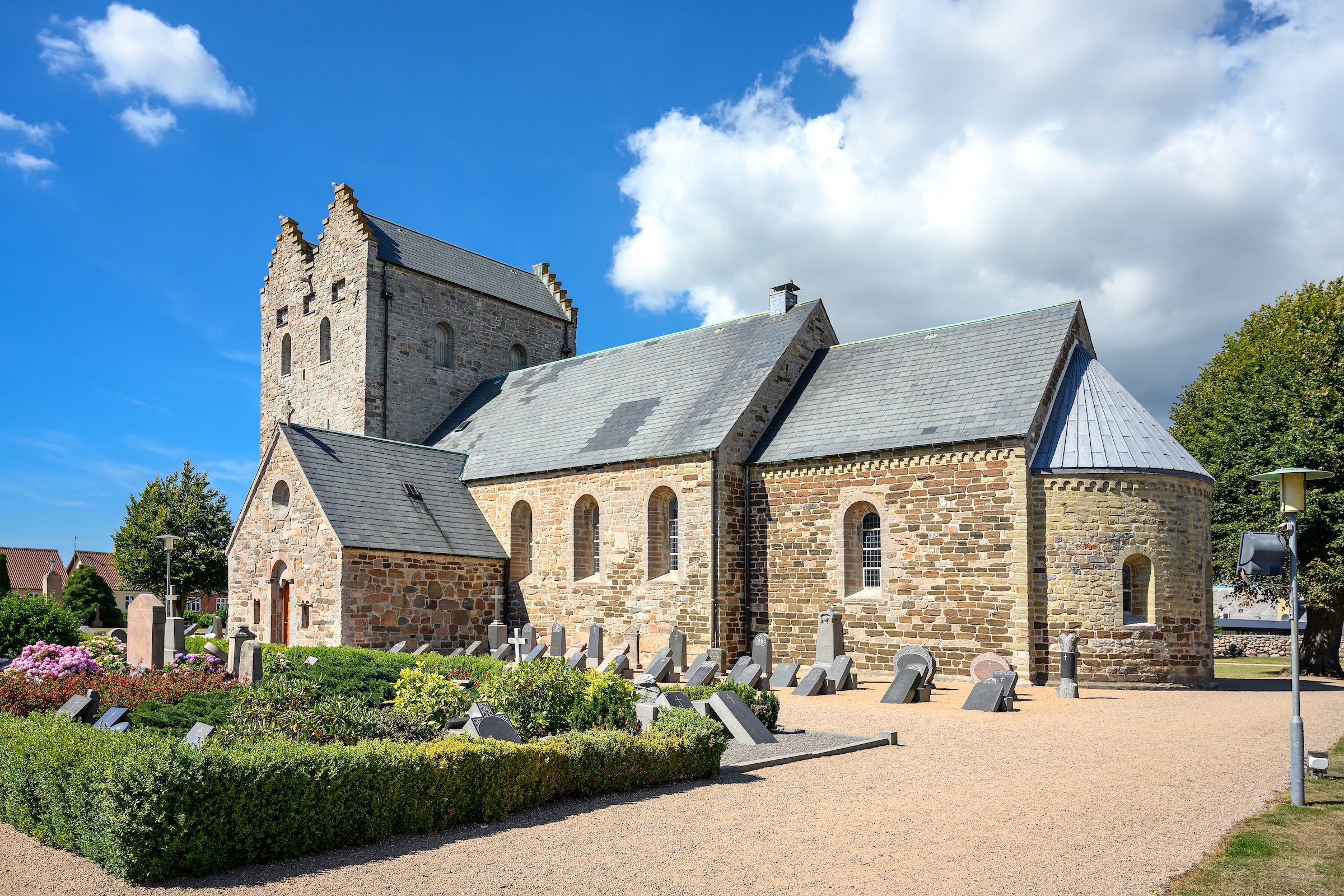
Aakirkeby
Bornholm's only inland town
Overview
Rønne, Gudhjem, Svaneke, the small fishing villages and the fortress island of Christiansø, an overview of Bornholm's main places and how to combine them.
Bornholm's only inland town
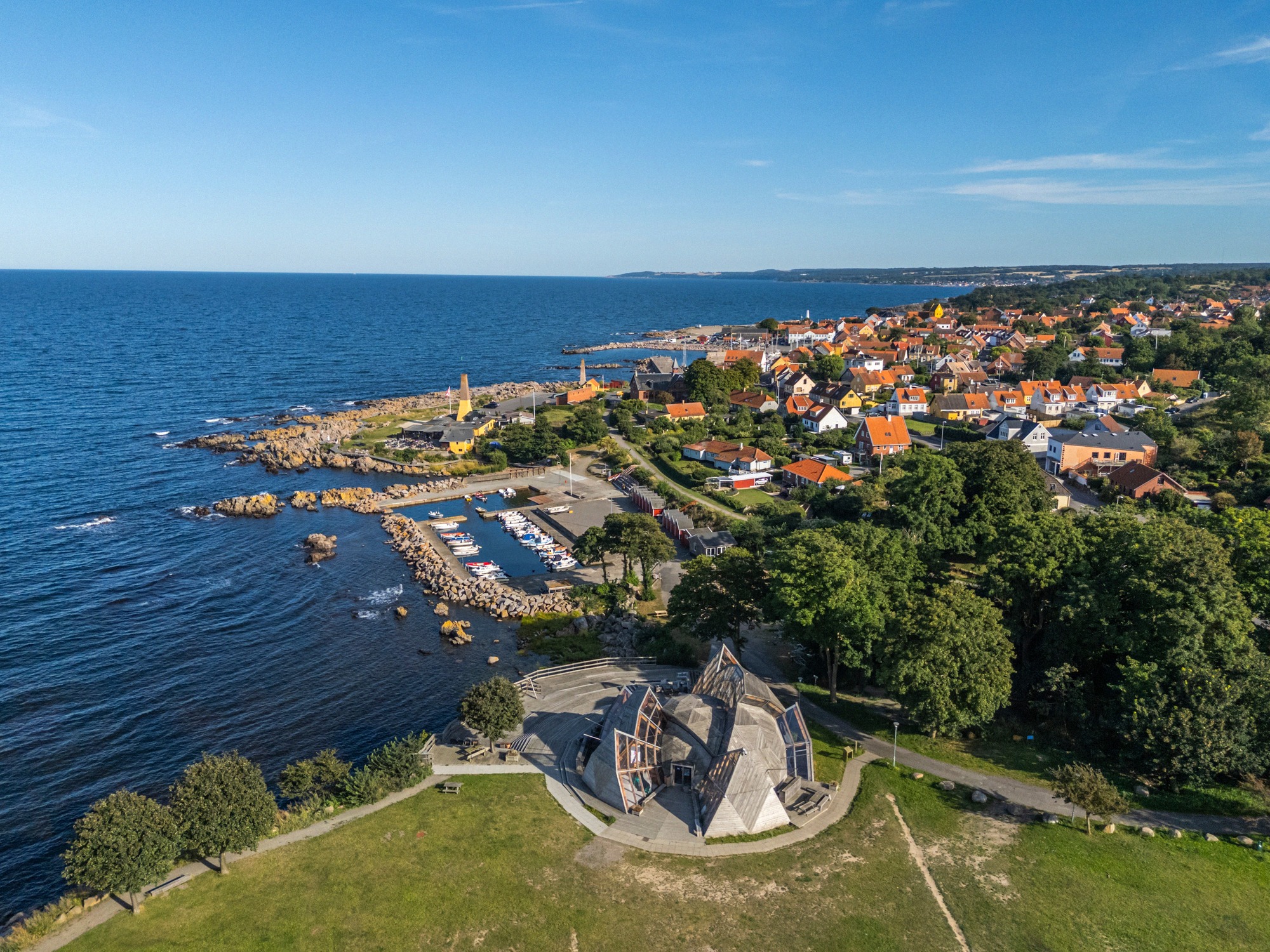
Northern harbour town with the Folkemøde
Denmark's only mountain town, on the northeast coast
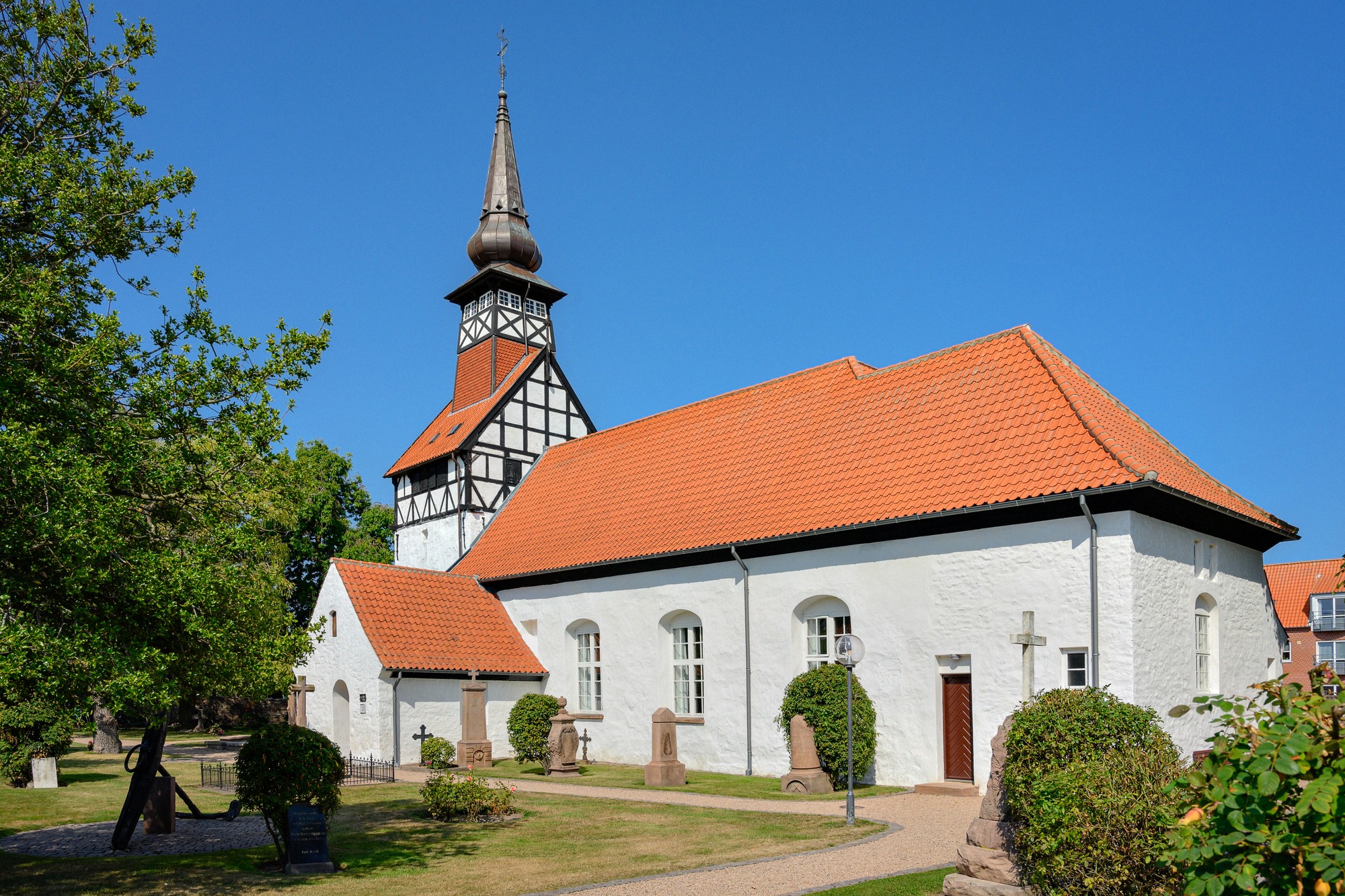
Fishing harbour on the east coast
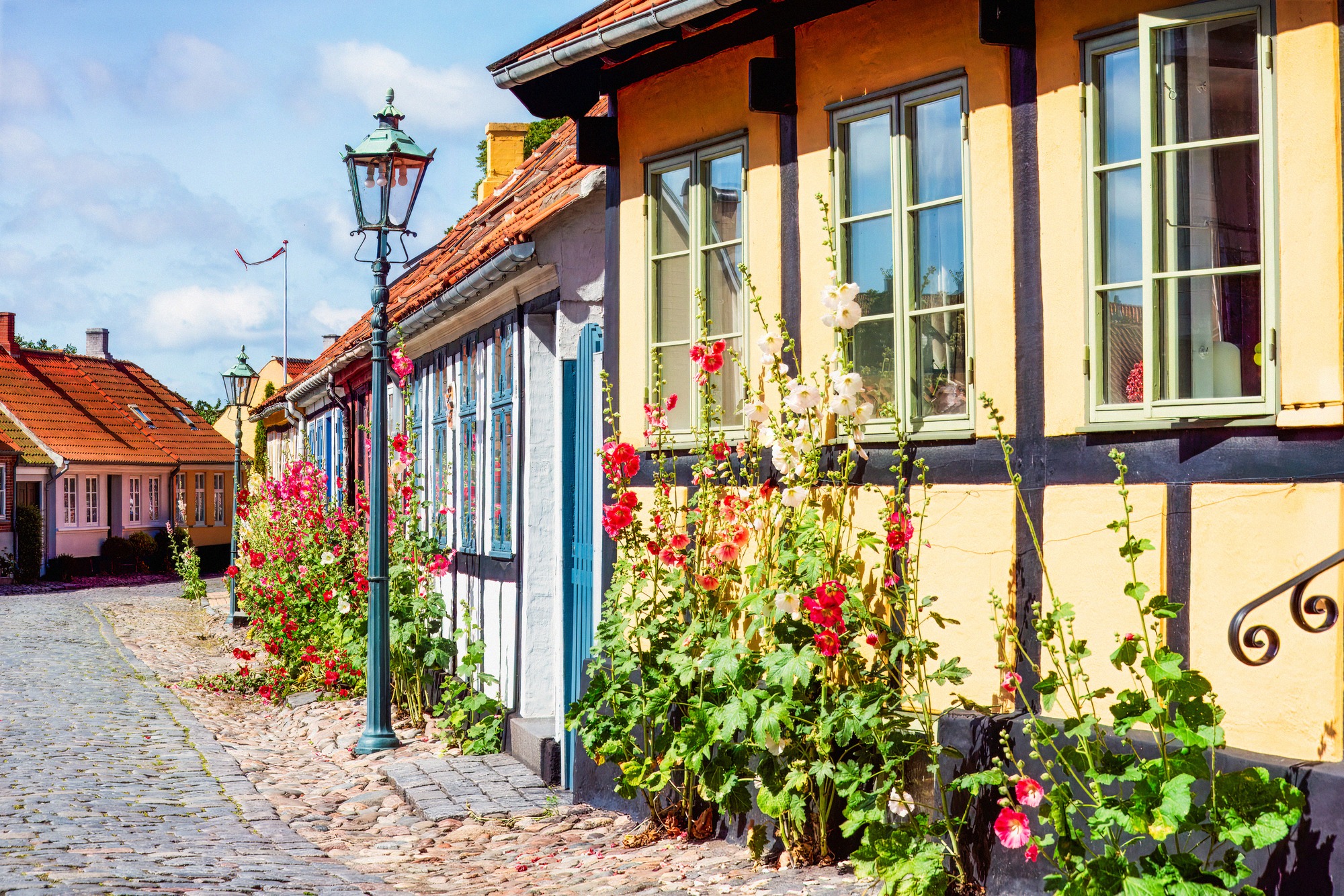
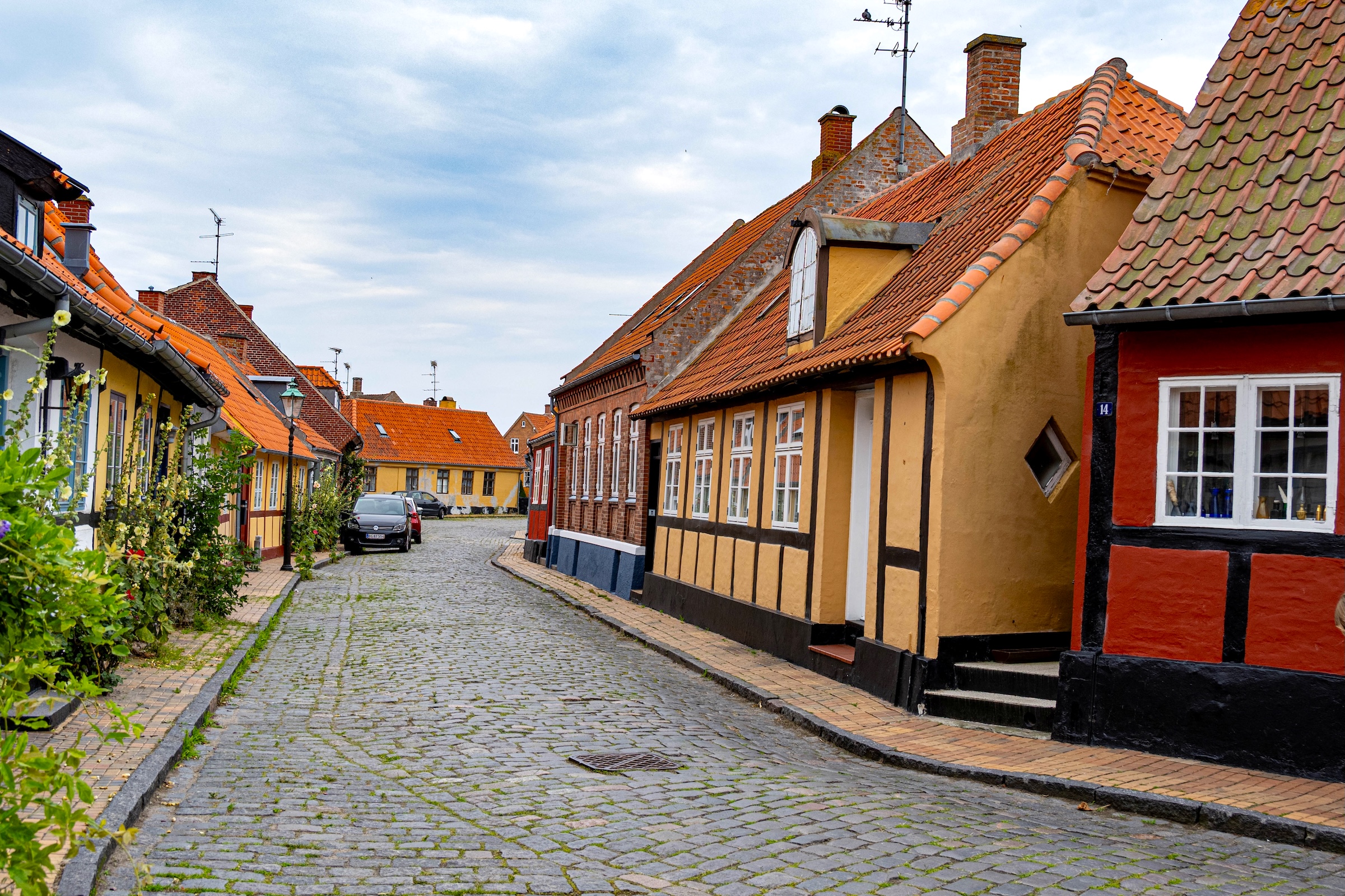
Ferry port and half-timbered old town on the west coast
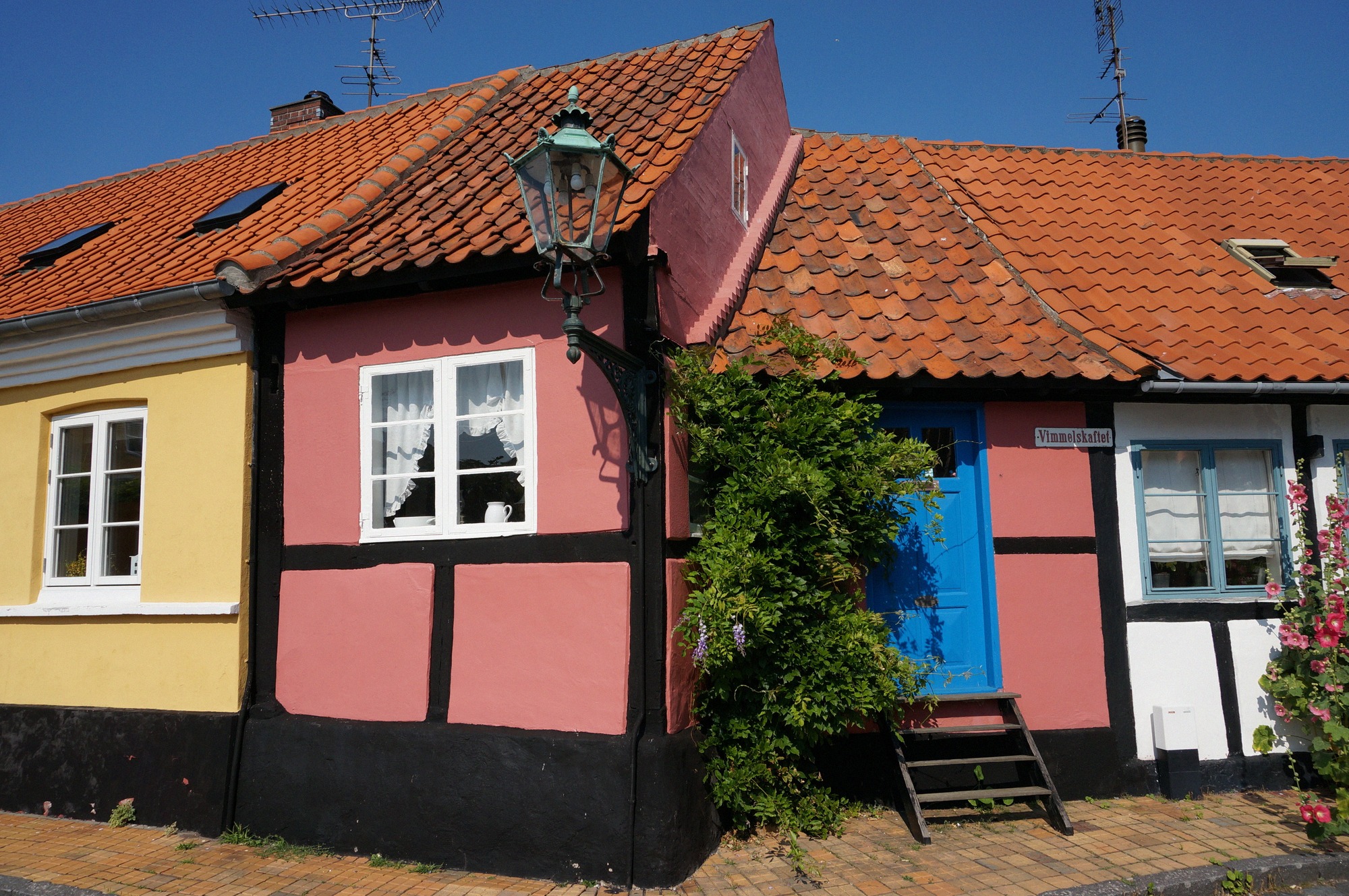
Denmark's easternmost town, with a harbour and crafts scene
No results found.
Bornholm is small, and almost all of its larger places sit on the coast, the one exception is Aakirkeby, inland in the island's interior. This concentration by the water shapes the island's character, half-timbered houses above small harbours, granite breakwaters, and a smokehouse in almost every coastal place. Because the distances are so short, several places are easy to combine in a single day, by bus, bike or car. This overview runs from the island's main town, through its well-known artists' towns, to the small fishing villages that are easy to miss.
Rønne on the west coast is Bornholm's largest town and, for most visitors, the first place they see on the island. With around 13,800 residents (2023 figure), roughly a third of the island's entire population lives here. Ferries dock in the harbour, with connections including Ystad, Køge and Sassnitz, so practically every arrival by sea passes through Rønne. For the best way to get there, see the Getting there guide.
Behind the busy harbour lies a well-preserved old town of half-timbered houses and cobbled streets. Landmarks include the Sct. Nicolai Kirke, whose origins go back to the 13th century, a white lighthouse from 1880 above the harbour, and the Rønne Teater - Denmark's oldest surviving theatre. For those interested in the island's history, several museums sit close together here, the cultural-history Bornholms Museum on Sct. Mortensgade 29 (home to the "Guldgubber" gold-foil figures found at Sorte Muld), the Hjorths Fabrik ceramics museum and the Erichsens Gård town and garden museum.
Gudhjem on the northeast coast is one of the island's most visited places, its houses climb the rock face in terraces, with narrow lanes and hollyhock gardens in between. It's a good base for excursions, the famous Østerlars round church, for instance, lies only around five kilometres to the south. Gudhjem is also home to Gudhjem Røgeri (Ejnar Mikkelsensvej 9), built in 1910 and, with its yellow chimneys, Bornholm's oldest smokehouse still in operation. This is the place to try the island speciality "Sol over Gudhjem", smoked herring on bread with raw egg yolk, chives and radish. The town's arts and crafts scene includes the Glasrøgeri and Baltic Sea Glass glassworks, plus the Gudhjem Mølle, a Dutch-style windmill from 1893 that now houses a restaurant.

Svaneke, further south on the east coast, was voted Denmark's prettiest market town (købstad) and is known for its well-preserved 16th- and 17th-century architecture. Crafts thrive here too, on Glastorvet, the open Pernille Bülow glassblowing studio lets visitors watch the glassblowers at work every day. On the market square stands Svaneke Bryghus, a brewery with a restaurant that brews unusual, unfiltered organic beers, including liquorice and seaweed varieties. Svaneke Røgeri has operated since 1919 and is easy to spot by its five white chimneys. More on the island's lively craft scene is in the Glass art guide.
Hasle on the west coast, north of Rønne, was once a fishing and mining town, south of the town lie its former clay and coal pits, now used as swimming and fishing lakes. The main draw is Grønbechs Gård, Bornholm's Centre for Crafts, across around 1,500 m² of exhibition space, local artists show textiles, glass, painting and ceramics, with around 20 changing exhibitions during the season. It is open from April to November, daily from 10:00 to 17:00 in season; admission is 50 DKK, with under-18s free.
Dueodde on the southern tip isn't a classic town but a holiday area around the island's most famous beach. It stretches for several kilometres around the southern point and is known for its exceptionally fine, white sand, once used as blotting sand and for hourglasses. An accessible wooden boardwalk leads around 500 metres through the dunes to shallow, child-friendly water; there is parking on Fyrvejen and via Skrokkegårdsvej. Above the beach stands Dueodde Lighthouse, at 47 metres the tallest lighthouse on Bornholm, in Denmark and in Scandinavia, built from reinforced concrete in 1962. In the summer season it can be climbed at irregular times via around 196 steps (a symbolic admission of around 10 DKK for age 12 and over). The larger paid attraction at the southern tip is Bornholmertårnet, a former NATO listening post over 70 metres tall with an observation platform, admission 125 DKK for adults, 75 DKK for children aged 4 to 12. Details on the beach and the tower are on the Dueodde Beach page, and more on the island's lighthouses is in the Lighthouses guide.
A Bornholm speciality is its four medieval round churches, fortified churches that doubled as defensive structures, scattered across the island. They lie close enough together to combine into a short round trip, and are reachable via the island's cycling and bus network.
The churches are generally open from Easter into autumn (roughly through week 42), usually Monday to Friday from around 09:00 to 15:00, provided there isn't a service, wedding or funeral taking place.
Beyond the well-known towns, it's worth seeking out the small, often-overlooked coastal places, this is where the fishing atmosphere feels most authentic.
Smokehouses with their white chimneys are part of the scenery in almost every one of these places. In season, roughly late March to mid-October, the larger houses mostly open daily; a few, such as Nordbornholms Røgeri in Allinge, stay open all year. For an overview of hours and prices, see the Smokehouses guide.
Around 18 kilometres northeast of Bornholm lies Christiansø, Denmark's only archipelago island and the easternmost point in the kingdom. This preserved naval fortress dating from the late 17th century is car-free, has around 90 permanent residents, and belongs to no municipality, it answers directly to the state. It's reachable only by ferry from Gudhjem, the crossing takes around 55 to 60 minutes. A return ticket costs 220 to 320 DKK for adults depending on season (plus a 10 DKK fuel surcharge from 7 April 2026), and admission to the two tower museums is 40 DKK. Most visitors come for a day trip of around three hours, enough time for the bastions, both towers and a break at the inn.
Travelling without a car, the BAT island buses are your best option. The regular lines 1 to 6 connect Rønne with Nexø, Svaneke, Gudhjem, Allinge/Sandvig and Aakirkeby all year round; in summer, BAT runs an expanded holiday timetable with more services. In season, the coastal circuit lines 7 and 8 are added, line 7 runs Rønne-Hasle-Hammershus-Gudhjem-Svaneke-Dueodde-Airport-Rønne, and line 8 covers the same loop in the opposite direction. Fares are zone-based: in 2026, a single ticket costs between 18 DKK (one zone) and 90 DKK (right across the island), and an all-zone day pass costs 174 DKK; children aged 0 to 15 pay half price, and taking a bike on the bus is free. Note that the Danish Rejsekort travel card does not work on Bornholm, buy tickets via the BAT app or on board. Current timetables and prices are at bat.dk.
The nicer alternative is cycling. Bornholm has a network of around 250 kilometres of largely car-free, mostly paved cycle paths, many of them following former railway lines. The national cycle route "Bornholm Rundt" circles the whole island over around 105 kilometres, starting and finishing in Rønne and passing Helligdomsklippen, Gudhjem and Svaneke along the way. For planning stages and hiring bikes, see the Cycling guide.
The best time to visit is summer. Bornholm is known as Denmark's "sunshine island", with around 1,580 hours of sunshine a year, the highest figure in the country. From June to August the sun shines for eight to nine hours a day on average, daytime temperatures sit around 20°C, and it's comparatively dry, with rain more likely in autumn and winter. July and August are the warmest months but also the busiest - June and September are pleasant and noticeably quieter. More in the Weather guide. Outside the season, many smokehouses, workshops and round churches are closed, but you'll have the places largely to yourself.