
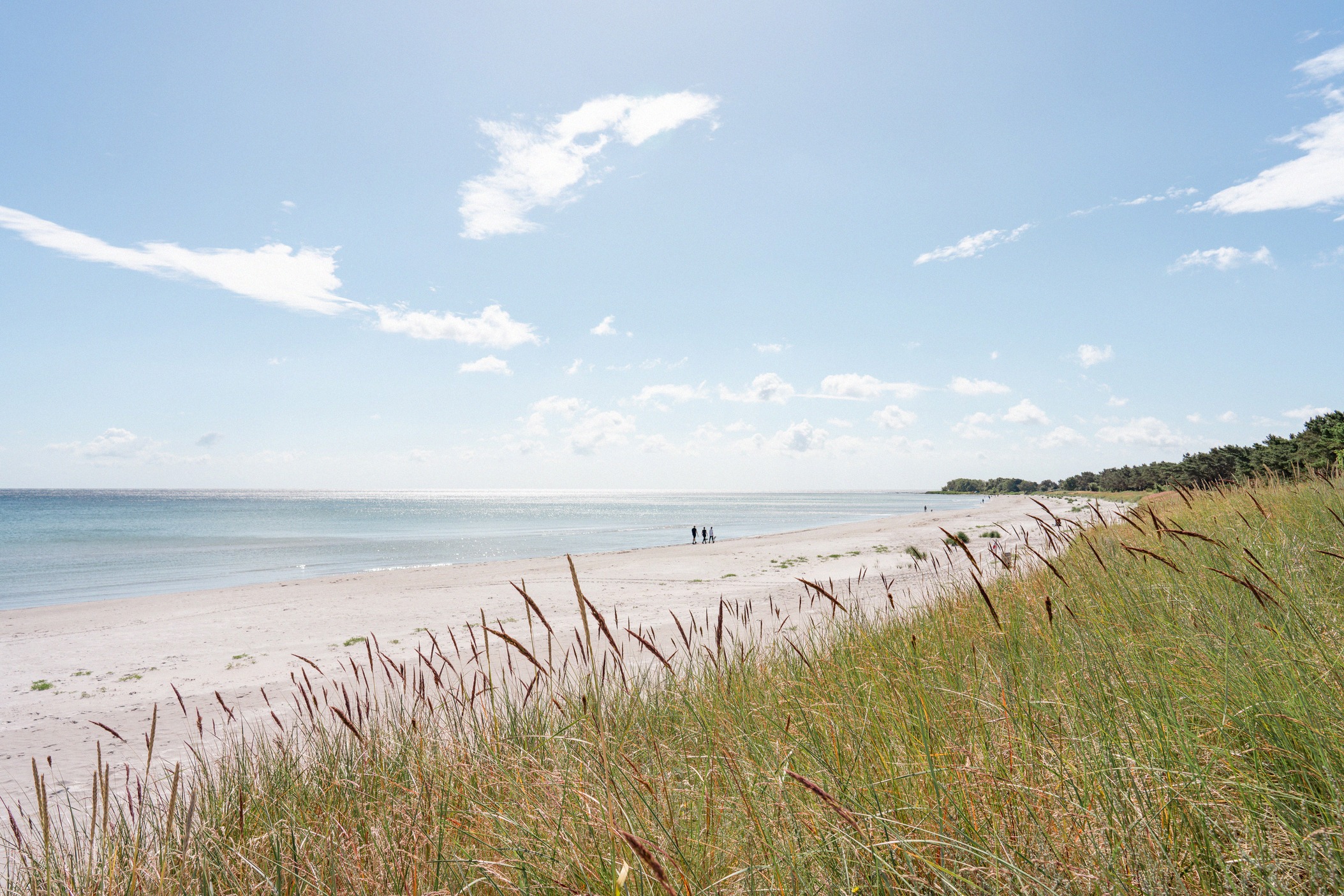
Balka Beach
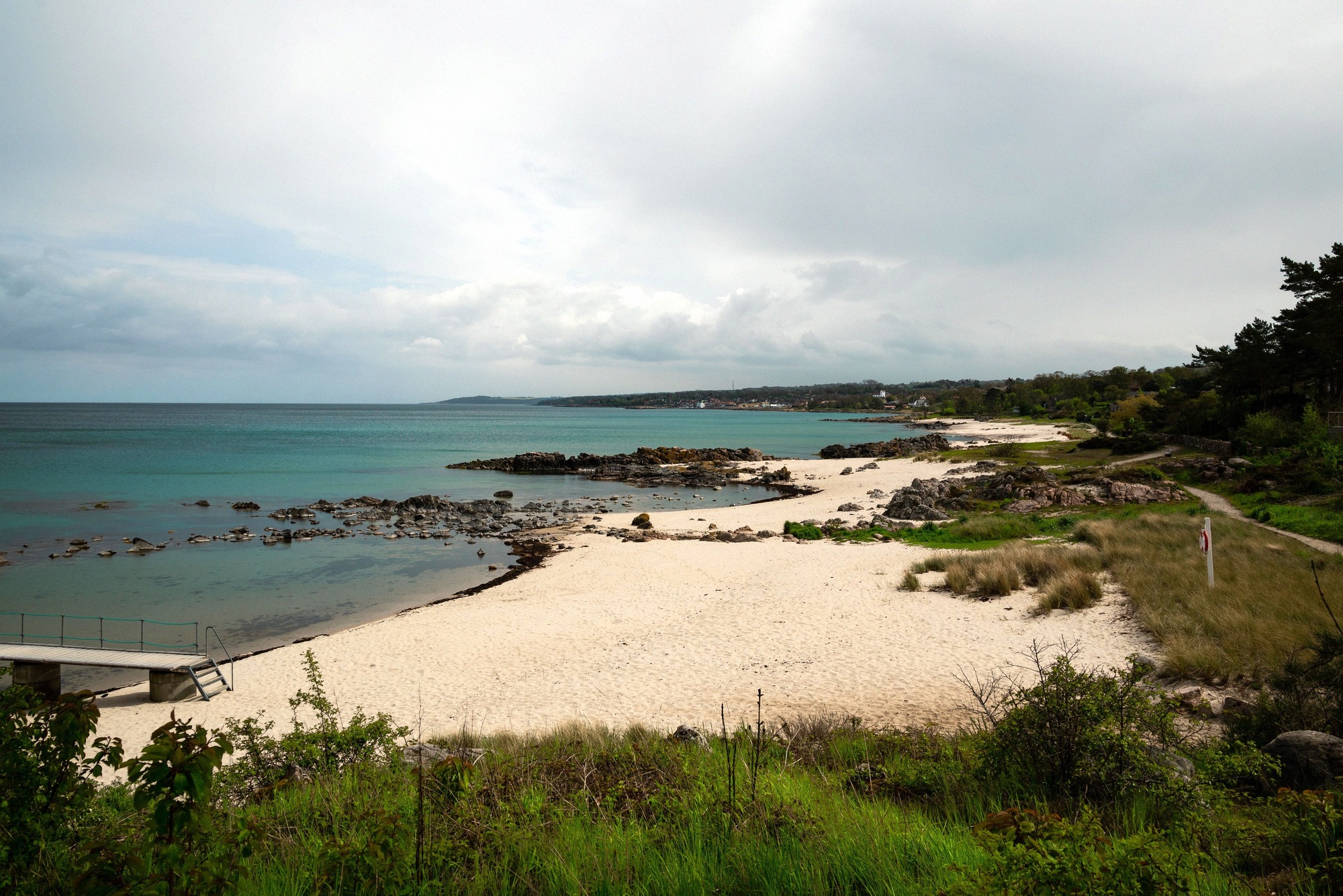
Family-friendly bay near Nexø
Overview
Fine white sand in the south, rocky coves in the north, free harbour baths and surf spots - Bornholm's best beaches at a glance, with water quality, lifeguards and the algae season.
Family-friendly bay near Nexø
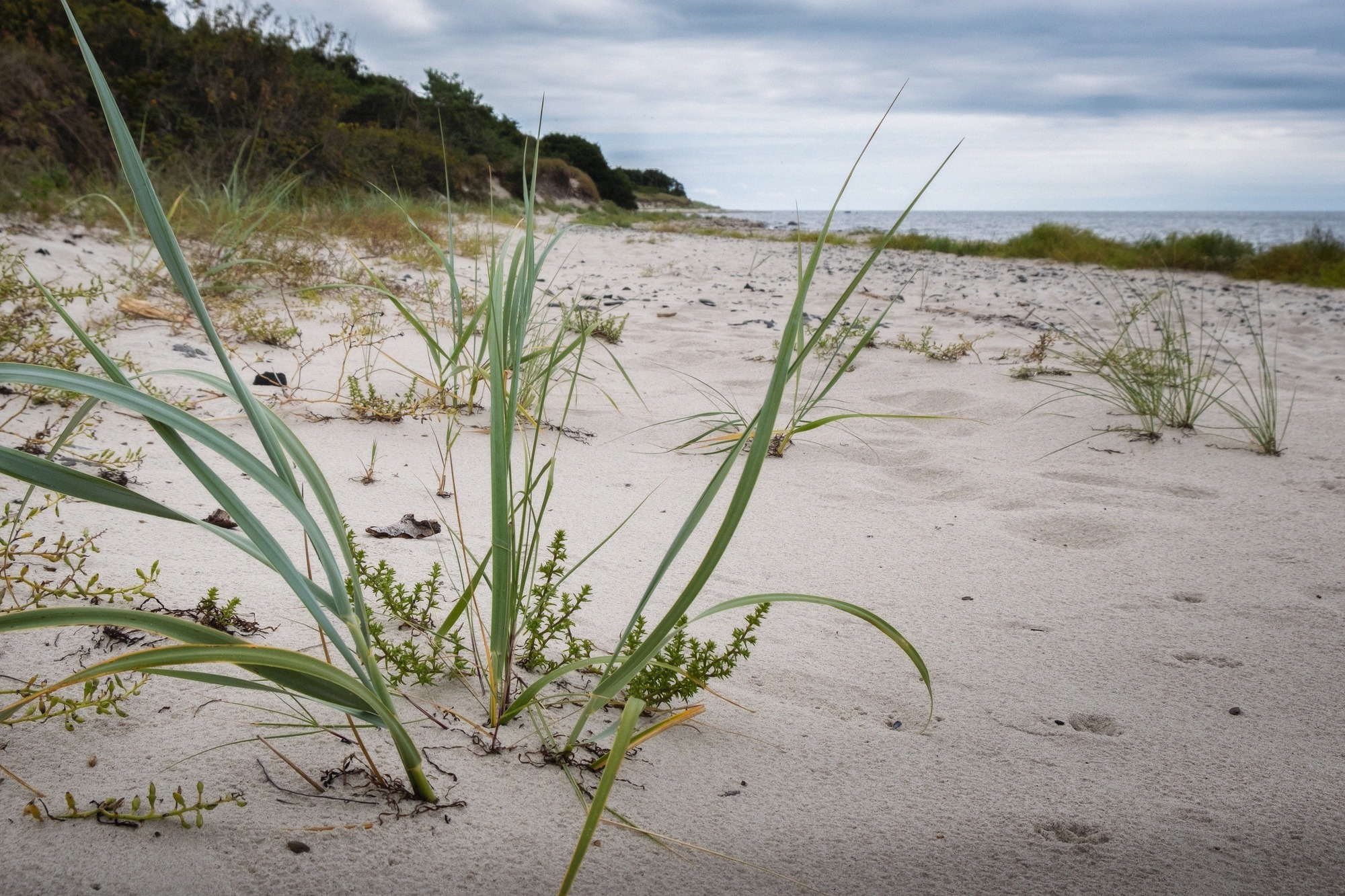
A sheltered bay at the mouth of the Læså
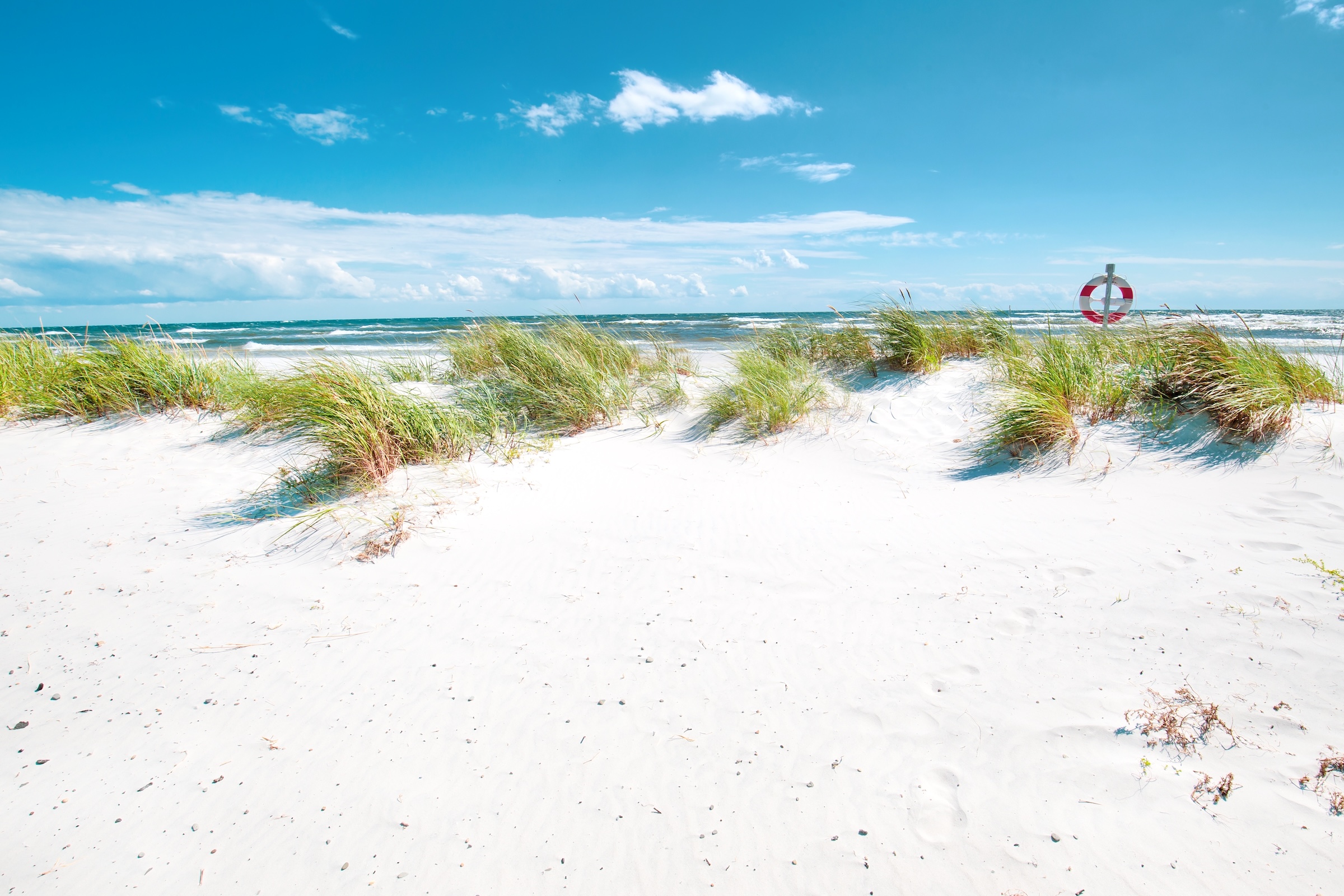
White sand beach at Bornholm's southern tip
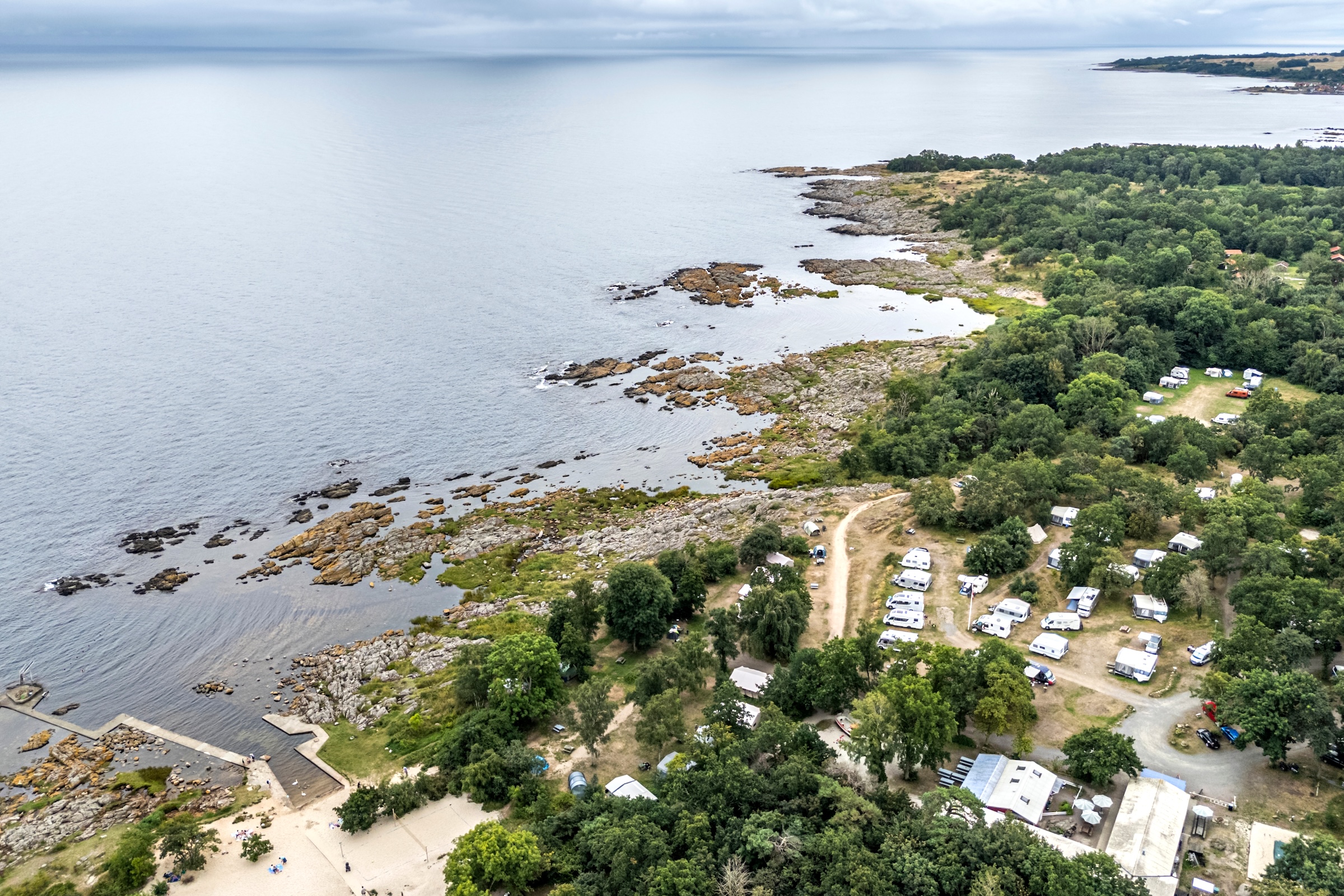
Bay with diving tower near Svaneke
Bathing cove in the fishing village near Gudhjem
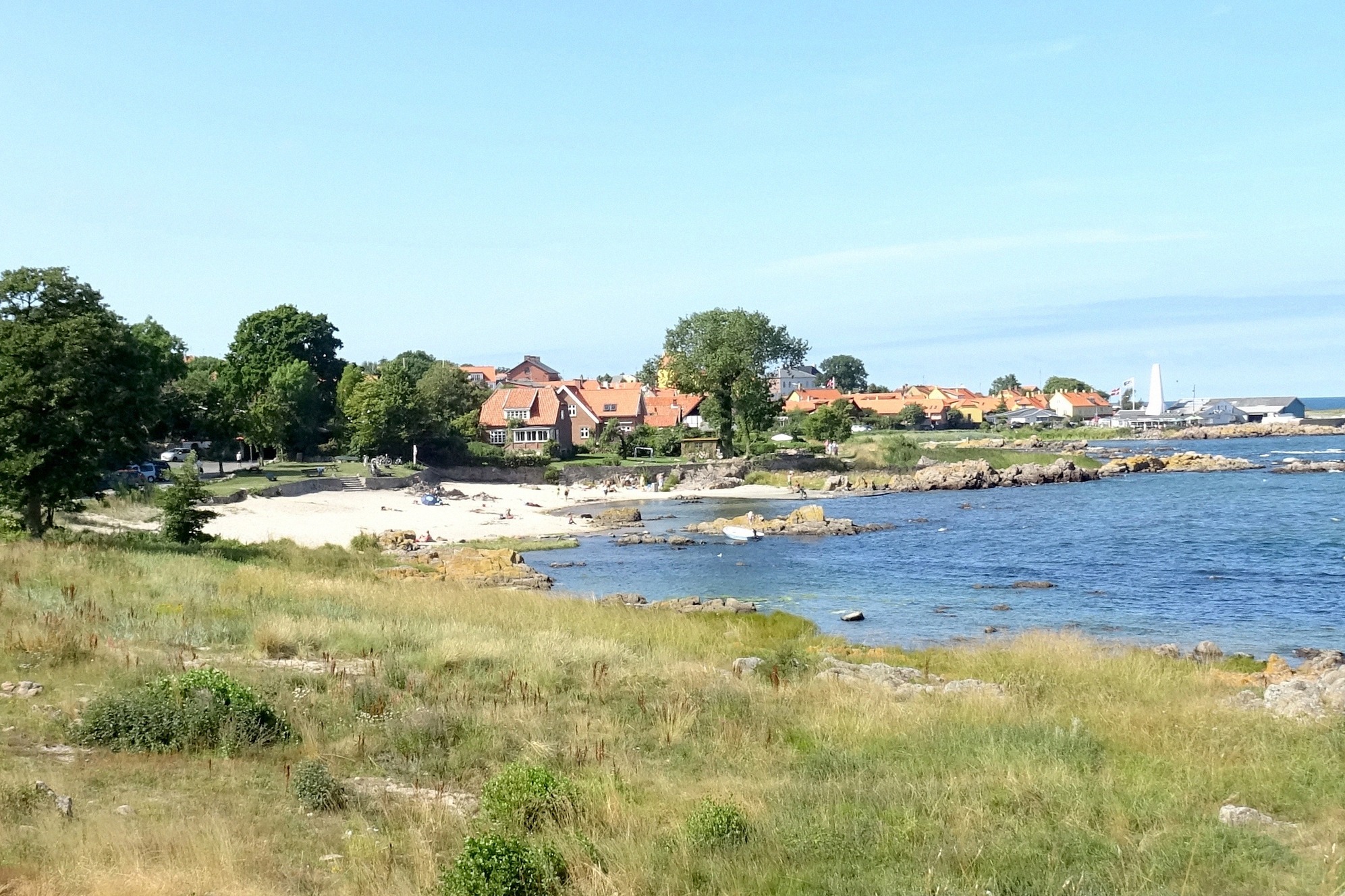
Small bathing spot among granite rocks near Allinge
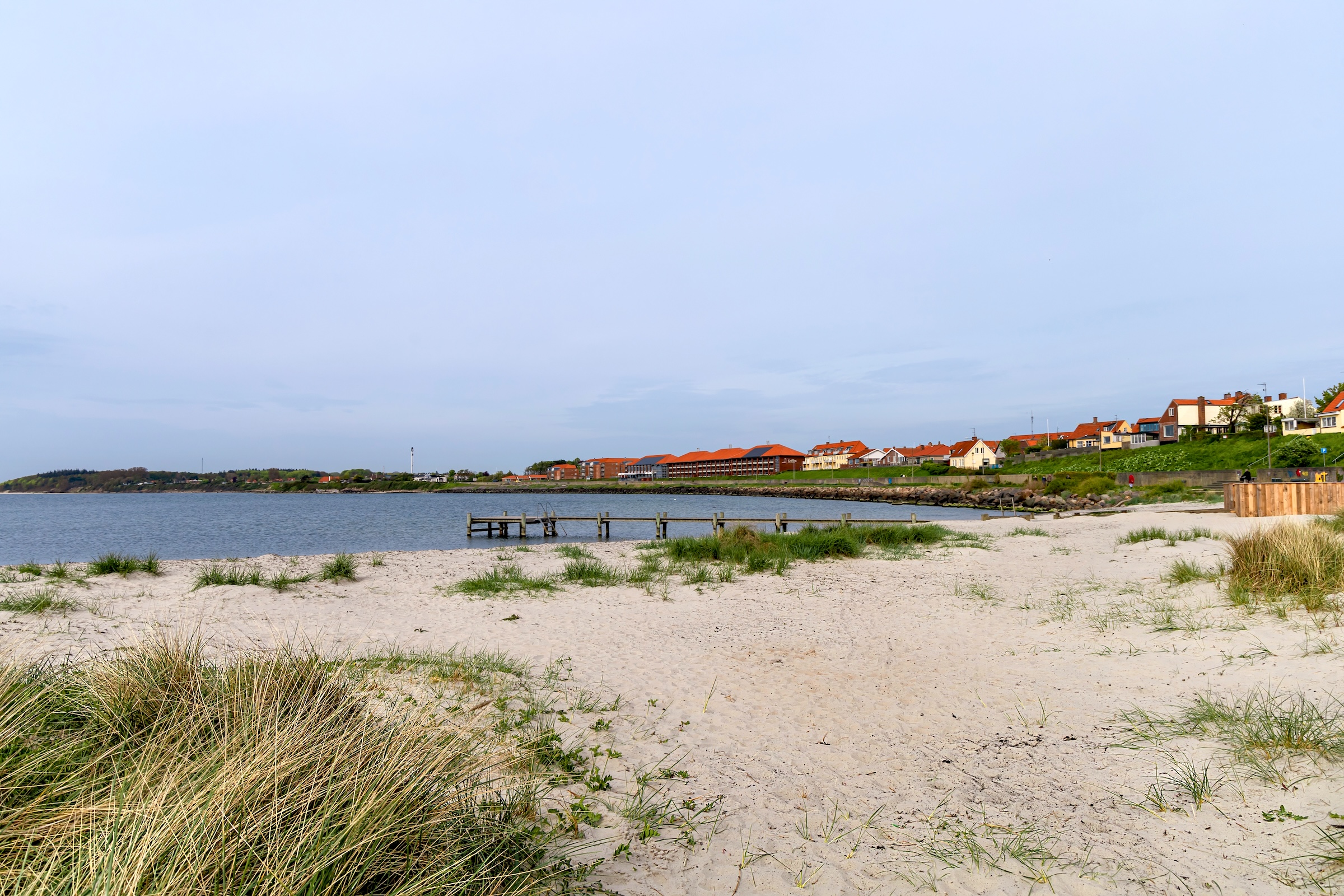
Antoinette, Galløkken, Nørrekås and Stampen

Bathing bay at the foot of Hammerknuden
Boulders, a fishing village and Michelin dining
Bathing coves on Bornholm's north coast
No results found.
Bornholm's coastline packs remarkable variety into a small area. In the south, mile after mile of fine, pale sand runs along shallow water; in the north, granite cliffs and rugged rocky coves define the shore, with small pockets of sand tucked between the rocks where you can often swim in peace even at the height of summer. Add to that newly built harbour baths with saunas and diving platforms, plus wooden bathing jetties that make it easier to get into the water. This guide sorts the island's best bathing spots and answers the practical questions that come first, water quality, lifeguards, algae, and how to get to the beach, whether you've arrived by ferry, plane or your own car.
The island is small enough that no bathing spot is out of reach - so the choice comes down to character rather than distance. The "sheltered in" column follows the coastline: a beach is calm when the wind blows off the land, so a south-coast beach in a northerly, an east-coast beach in a westerly, and vice versa.
| Beach | Region | Good for | Sheltered in | On site | Access |
|---|---|---|---|---|---|
| Dueodde | southern tip | finest sand, families, shallow water | northerly wind | kiosk and toilets at the car park in season | Fyrvejen car park, around 600 m to the water, dune ramps end 100 m short |
| Balka | south-east | toddlers, windsurf and SUP beginners | westerly wind (the bay lies in the lee) | kiosk, toilets, two rental stations, minigolf | Frederiksvej car park, ramp close to the water |
| Sømarken | south | swimmers, boulders to jump from, older children | northerly wind | car park and toilets | access between Slusegård and Boderne |
| Boderne | south-west | naturism, surfing, few crowds | northerly wind (hills inland) | toilets, ice cream shop and café in summer | car park at the access point, beach free |
| Rønne beaches | west | swimming without a car, close to town | easterly wind | café and toilet at Antoinette via the campsite | on foot or by bus from Rønne |
| Sandvig | northern tip | swimmers, summer lifeguards, Hammershus nearby | southerly wind | car parks, toilets, kiosk and ice cream shop in the village | in Sandvig village, bathing jetty rather than a shallow entry |
| Næs | north | small bathing spot among the rocks, jumping from the jetty | southerly wind | toilet, smokehouse and bathing hotel next door | Løsbæksgade car park, path with a ramp down |
| Store og Lille Sandkås | north-east | families with small children, calm pool behind rocks | southerly wind | car park and public toilets nearby | Tejnvej 100, between Tejn and Allinge |
| Melsted | east coast | a quick swim near Gudhjem, stream mouth for children | westerly wind | toilets, Melstedgård museum next door | a few minutes' walk south of Gudhjem |
| Hullehavn | east coast | clear water, diving platform, rock bathing spot | westerly wind | toilets, kiosk, bathing ladder, unstaffed rescue post | 5-10 minutes' walk from Svaneke, car park 500 m away |
Four rules of thumb follow from this:
Two beaches are signposted as accessible: Balka, via a surfaced path and a ramp close to the water, and Dueodde, via two wooden ramps more than 500 metres long through the dunes, though these end a good 100 metres short of the water. At the remaining bathing spots, step-free access is not documented.
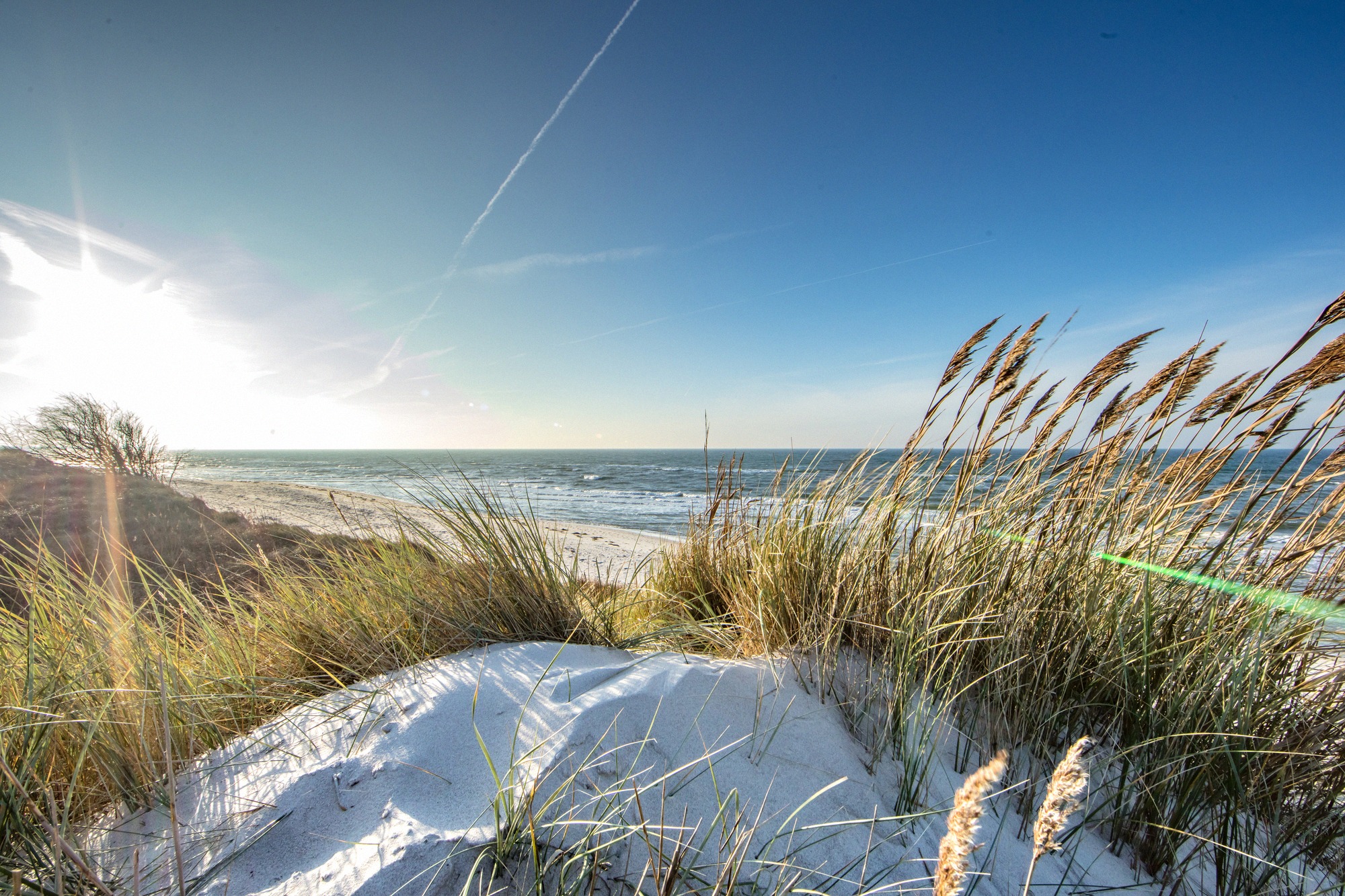
The island's beach heartland is the south. This is where you'll find Dueodde, Bornholm's best-known beach, famous for sand so fine and pale it was once used in hourglasses. A long ramp leads from the main car park through the dunes to the water, making access possible for wheelchair users too. To the west lie Sømarken and Boderne, while the sheltered bay of Balka follows to the east.
Balka is generally considered the island's most family-friendly beach, the seabed shelves so gently that you can wade out a long way before the water reaches your hips. Compared with Denmark's North Sea coast, the Baltic surf here stays mild, dangerous currents are rare, and the tidal range between high and low water is negligible. That makes much of the south coast genuinely well suited to young children, though the usual rule still applies everywhere: never leave children unsupervised at the water's edge.
The picture turns wilder in the north. Instead of broad sandbanks, expect granite cliffs, rock platforms and small coves, spectacular scenery, but more demanding for swimming. In any swell, avoid entering the water from exposed rocky shores, since the risk of injury is high. On calm days, though, the rocky coves are ideal for snorkelling and sunbathing on warm stone.
A pleasant exception is the sandy beach at Sandvig on the northern tip near Hammershus, one of the few larger sandy beaches in the north. A little further south, at Lille Sandkås north of Tejn, a roughly 700-metre stretch of beach has a long bathing jetty at its northern end. Large stones placed in the water there create a wave-sheltered, child-friendly area, with parking and public toilets nearby. On the east coast, the rocky cove of Hullehavn near Svaneke is also worth a dip in its clear water.
In recent years Bornholm has expanded its swimming options well beyond the classic beaches. Floating harbour baths have sprung up in the island's harbour towns, ideal for a quick swim right in the middle of town.
Hasle Havnebad (Havnen 25, 3790 Hasle) is a floating harbour bath with several pools, two children's pools and diving boards. The pool itself is free to use; the sauna is run by the local Hasle Badeklub association and kept warm daily from 06:00 to 22:30. Guest access to the sauna costs 50 DKK per person (maximum two guests per member, paid via MobilePay) and requires either membership or a guest wristband.
Svaneke Havnebad (Svaneke Havn 3B, 3740 Svaneke) allows year-round bathing and has a large sauna designed by architect Bente Lange, seating 20 people. Sauna hours vary by day: Mondays 06:00-11:00, Tuesday to Friday 06:00-21:00, Saturdays 07:00-17:00 and Sundays 07:00-21:00. Guest access to the club costs 50 DKK for 24 hours and includes bathing ladders, an outdoor shower and the sauna. There's also a public harbour bath with bathing ladders and a three-tier diving tower. Read more about the town in the Svaneke guide.
Wooden bathing jetties make it easier to get into the water at several beaches, including Nørrekås, the beach at Melsted near Gudhjem, Sandvig and Lille Sandkås. The Melsted jetty was rebuilt more robustly by Bornholms Regionskommune in July 2021 after an autumn storm destroyed the old one in 2020, with the aim of it withstanding future storms. Whether it stays in the water year-round or is serviced and removed seasonally isn't officially documented, it's worth checking on the spot whether a jetty is currently in place.
Bornholm's bathing water is generally regarded as very clean and is monitored regularly. The official bathing water profiles maintained by Bornholms Regionskommune rate the water at Balka, Dueodde and Sandvig as "udmærket" (excellent), the top EU category. The underlying measurement series in those profile texts date from 2016 to 2019; a separately published classification for 2025/2026 wasn't available, but the overall picture remains consistently excellent, and there are no known pollution sources near Balka.
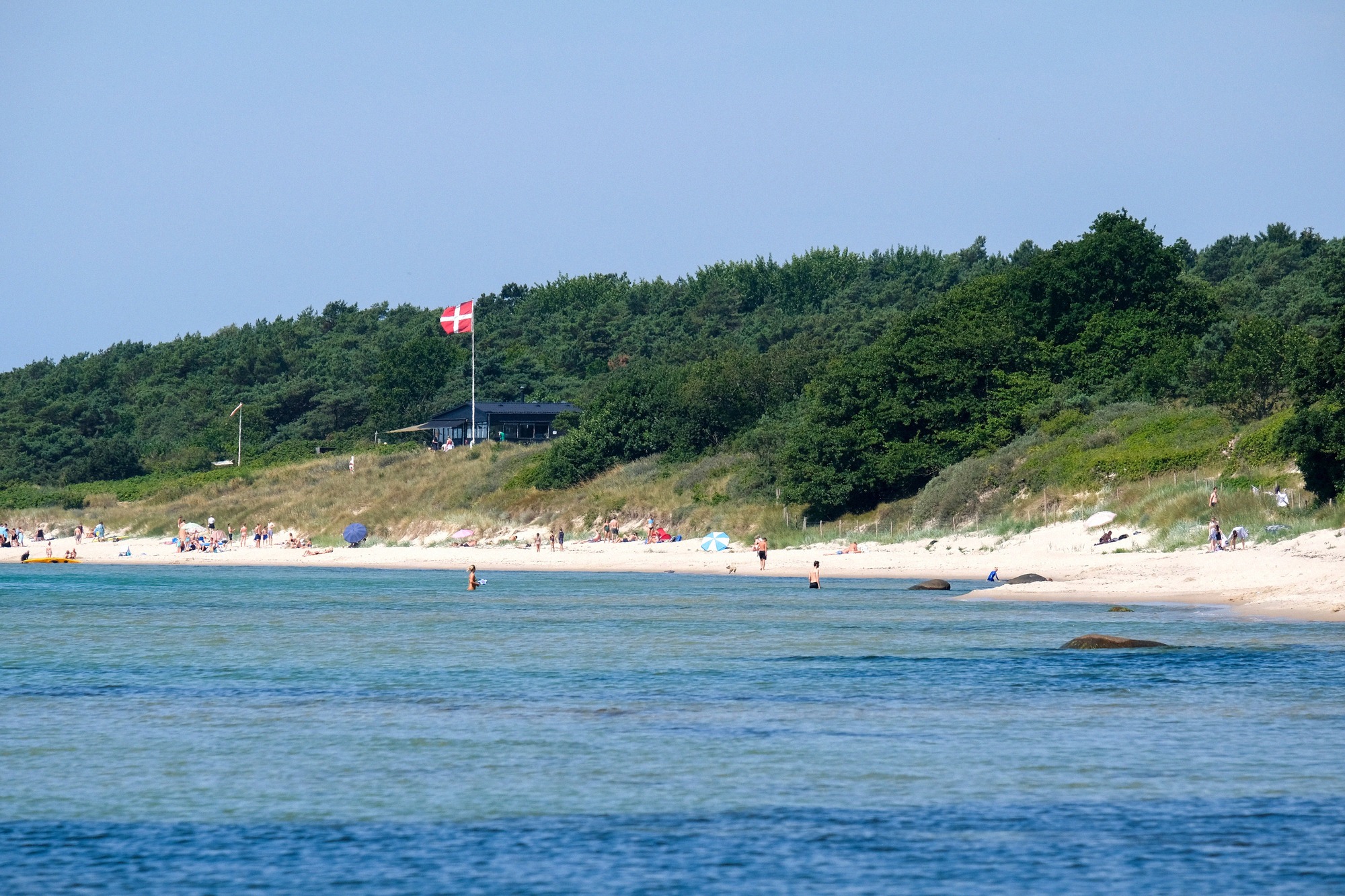
Lifeguards patrol only two beaches on Bornholm: Balka Beach and Sandvig Beach. TrygFonden Kystlivredning lifeguards are on duty there daily from 10:00 to 18:00 in high season, roughly from the start of the Danish school holidays in late June to around 20 August. Exact dates for 2026 were not officially available at the time of writing. Dueodde and the Rønne beaches are unsupervised. Nationwide, TrygFonden staffs lifeguards at 34 popular Danish beaches and harbour baths each summer, so Bornholm's share of that is small. At supervised beaches, the usual flag system applies:
As everywhere in the Baltic Sea, blue-green algae (cyanobacteria) can appear in warm summers, typically in July and August during sunny, calm weather. It's a natural phenomenon documented for over a century, and it was observed at several Bornholm beaches again in 2025. A longer-term trend is well established, though: warmer surface water has shifted the Baltic's algae bloom peak roughly three weeks earlier over a 35-year record, from around 9 August to around 19 July. In practice, it helps that coasts are rarely all affected at the same time, if one bay has algae, the sheltered side of the island usually has clear water, and distances on Bornholm are short.
The waters off Bornholm are well known among surfers, thanks to the island's position, there's almost always a suitable wind on one coast or another. The most popular spots lie in the south and west: the shallow bay at Balka as a beginner-friendly spot, plus the western end of Dueodde beach, Boderne, and the bay at Nørrekås north of Rønne's ferry harbour.
At Balka Beach there are two independent rental outfits. Surf Bornholm (Vester Strandvej, 3730 Balka Strand, white tent) is run by Bjarke Clausen and describes itself as Denmark's oldest windsurfing school (founded 1977); instructors are trained by World Windsurfing Schools and the Danish Sailing Association, and lessons are available from age 6. In season (1 June to 15 September), it's open daily from 10:00 to 17:00 (tel. +45 61787605). Hire, including wetsuit and harness, is charged by the hour:
On the same beach, Eastwind Watersports (eastwind.dk) runs as a separate operator, hiring equipment and giving lessons, priced by the hour and in three-hour blocks (a full windsurf set costs around 150 DKK an hour or 400 DKK for three hours, wetsuit extra). It's best to check on the spot which outfit is staffed. Both operators only confirm exact lesson prices and 2026 season dates directly. In Rønne, Bornholm's largest sailing club, Rønne Sejlklub at Nørrekås harbour, also runs activities for all ages through its surfing section, and its junior sailors use surf and SUP boards among other kit. For more on the water, see the Activities on Bornholm guide.
Around the small bird islands of Ertholmene northeast of Bornholm, nature protection is strict. The island group, including Christiansø, has been protected since 1926 and has been an international nature reserve since 1998 (Ramsar, EU bird and habitat protection). On the bird island of Græsholm and the surrounding skerries, access and traffic are banned during the breeding season to protect Denmark's only breeding colony of razorbill and guillemot. Surfers and SUP paddlers keep well clear of the area; no exact buffer distance in metres is specified, and the basic rule is simply to keep your distance.
From the ferry port at Rønne, where international ferries dock and Bornholm Airport also sits just outside town, the main beaches are all within easy reach. It's around 25 kilometres by road to Sandvig on the northern tip, and about the same to Dueodde and Snogebæk in the south; Balka lies near Nexø in the southeast. Travelling without a car, the public bus operator BAT reaches all of them: one route runs from Rønne via the airport, Sømarken, Dueodde, Snogebæk, Balka, Nexø and Svaneke on to Gudhjem and Hasle, and a second runs from Rønne via Klemensker and Hasle to Allinge and Sandvig. Specific parking charges at the popular beaches aren't consistently documented; car parks exist at all the main access points.
Bornholm has no official nudist beach, but nude bathing isn't expressly banned either. Danish law only prohibits a deliberate "affront to modesty", so discreet nude bathing is generally not a problem. The Danish naturist association names Dueodde and Boderne as beaches where bathing without swimwear is particularly common; it tends to be tolerated more at the fringes of a beach than right next to the main access points. If in doubt, take a quick look at the situation on the ground and show some consideration for your neighbours.