
Getting There & Around
Overview
Car, ferry, train, bus or flight: this guide sorts the options and tells you which way is shortest from the region you are setting out from.
All routes compared
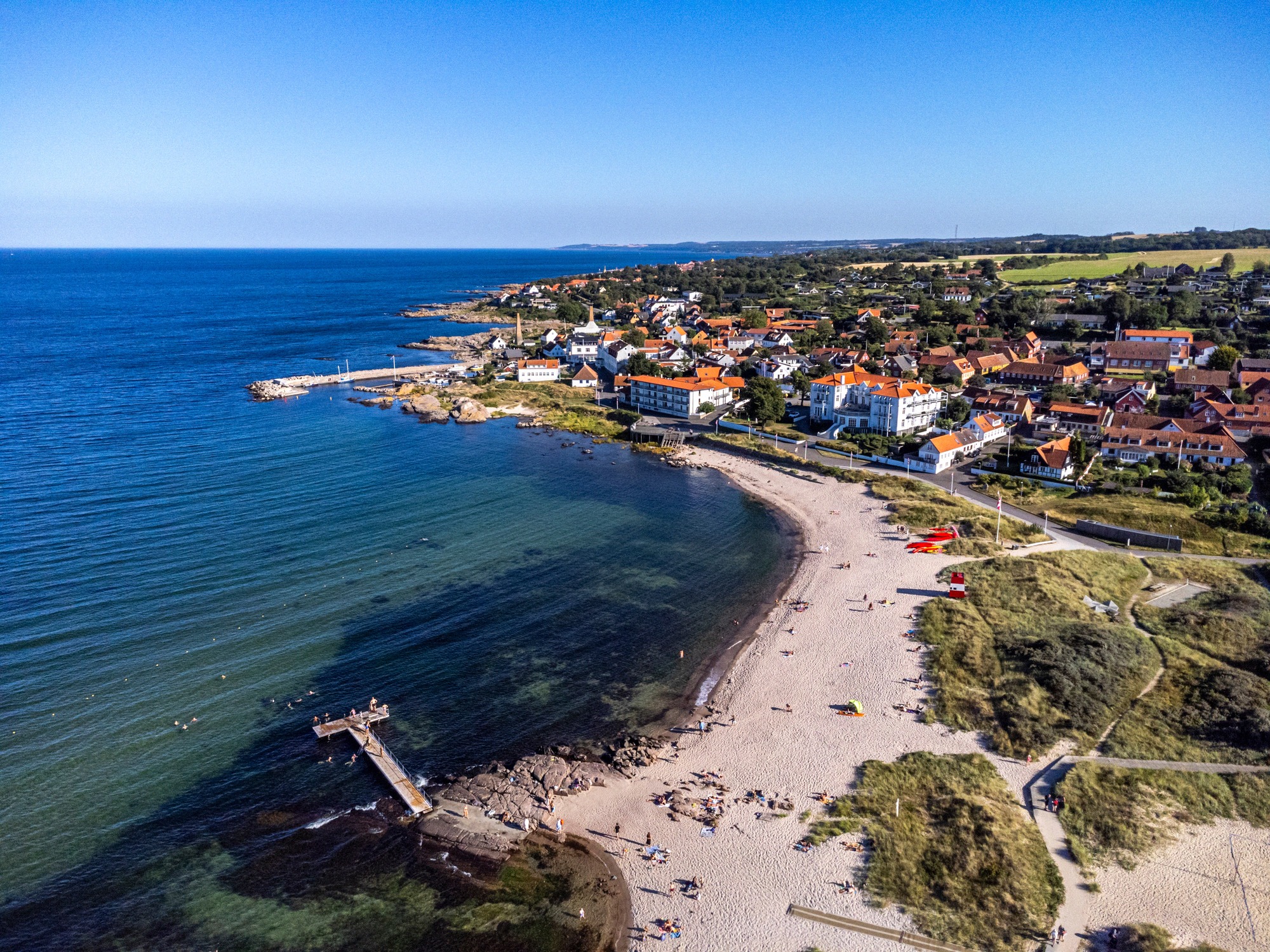
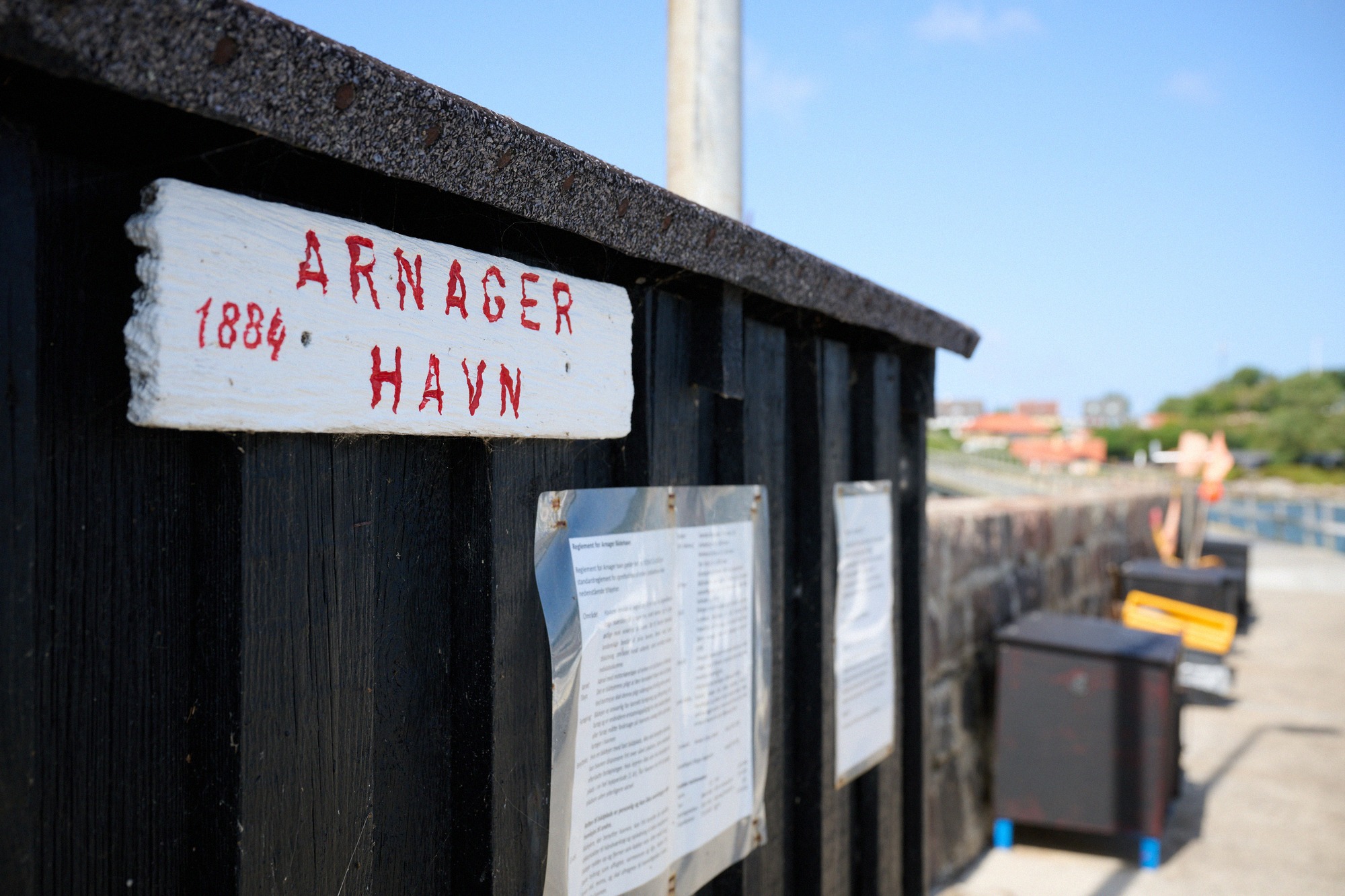
Bornholm sits on its own in the Baltic Sea, closer to Sweden than to the Danish mainland, and can only be reached by sea or air. All three direct ferries dock at Rønne, all run by the same operator, Bornholmslinjen, a brand of the Danish shipping company Molslinjen. Which route suits you best depends mainly on which direction you're travelling from and whether you're bringing a car.
| Way | Who it suits | Main leg | What to bear in mind |
|---|---|---|---|
| Car + ferry | families, motorhomes, anyone with luggage | 80 minutes to 5.5 hours depending on the route | three direct routes to choose from, booked out months ahead in high season |
| Flight from Copenhagen | no car, fast, short stays | 35-40 minutes | the airport is only a few kilometres outside Rønne |
| Train + ferry | no car, with luggage, unhurried | around three hours from Copenhagen | combined ticket via DSB, ferry included |
| Coach + ferry | no car, no changes | straight through from Copenhagen and CPH | the coach rolls onto the ferry with you |
| Cruise | day visitors | going ashore in Rønne | no travel planning needed |
You don't need your own vehicle on the island itself: the BAT bus network radiates out from Rønne and reaches every corner of Bornholm.
Which of the three ferry routes is right for you - crossing times, frequencies, ships, how pricing works and when to book - is covered in the comparison of the ferries to Bornholm; day-specific departures are in the Bornholm ferry timetable. If you're short on time or travelling without a car, check the flight to Bornholm from Copenhagen, Billund or Aalborg. Arriving by ship as a day visitor? The guide to cruises to Bornholm describes going ashore.
The decision is almost always made on land, not at sea: it depends on how many road kilometres and how many ferry crossings lie between you and Rønne.
Northern Germany, Berlin and Brandenburg. Hamburg and Berlin are each around three and a half hours from Sassnitz/Mukran on Rügen, and from there the direct ferry runs to Rønne without detouring through a third country. It is the shortest land route - but it depends on a seasonal timetable, so check first whether there is a sailing on your date at all.
Eastern Germany, Saxony and Thuringia. Here it is worth comparing Sassnitz against the route through Denmark. The Rostock-Gedser feeder ferry links Mecklenburg with Falster in about two hours; from there the road continues towards Zealand, either to Køge or over the Øresund Bridge to Ystad.
Western and southern Germany, Austria, Switzerland. If you are driving the long north-south axis anyway, you either take the short Fehmarn Belt crossing Puttgarden-Rødby (scheduled at around 45 minutes, frequent, then the E47 towards Copenhagen) or stay on the road entirely via Flensburg, Jutland and Funen, with the tolled Great Belt Bridge as the bottleneck. Both variants end at the same choice between Køge and Ystad.
Netherlands, Belgium, north-western Germany. The same corridors, only longer: Puttgarden-Rødby with onward travel to Køge or Ystad, or one of the crossings to southern Sweden - Travemünde-Malmö (scheduled at around nine hours, usable as an overnight leg), Travemünde-Trelleborg or Rostock-Trelleborg, then overland from Trelleborg to Ystad. Malmö takes longer than Trelleborg for geographical reasons: Trelleborg lies on the south coast of Skåne and is therefore closer to Travemünde than Malmö is.
Poland. There is currently no scheduled direct ferry from Poland to Bornholm. Today's route runs via Świnoujście-Ystad and then the fast ferry to Rønne. What became of the former Kołobrzeg-Nexø line, and how travelling from Poland works in practice today, is covered in detail in via Kołobrzeg to Bornholm.
Sweden. From Malmö, Lund or Gothenburg, Ystad is the obvious port; from Stockholm it is worth comparing against the flight via Copenhagen.
The feeder ferries to Zealand and southern Sweden do not go to Bornholm - they only replace road kilometres. You book the Bornholm leg itself separately.
For many travellers, combining car and ferry is the most convenient option. All three direct routes take cars, motorhomes, motorbikes and bicycles; how long each route takes, how often it runs and when you should book is compared in the guide to the ferries to Bornholm.
For planning on land, two figures matter most: the driving time to the departure port and the number of intermediate ferries. The route via Rügen needs a single crossing; the route via Sweden has a short sea leg at the end but considerably more kilometres on the road. Coming from the south, the choice is between the Fehmarn Belt ferry and the continuous road route through Jutland.
Travelling by electric car is manageable. Ideally, charge before you check in: there are charging points near all four ferry ports, in Ystad, Køge, Sassnitz and Rønne, and once you've checked in, charging at the port is no longer possible. If you've reserved charging on board, a check-in deadline of 30 minutes applies. In Rønne, several providers have charging points near the ferry terminal.
A planning note: in the July and August peak and over public holidays, the car ferries are often completely booked out. Because holiday homes usually change over on Saturdays, weekend slots are frequently gone months in advance. Book the crossing at the same time as your accommodation.
Bornholm is also easy to reach without your own car. Flying is the fastest option: the flight from Copenhagen takes just 35 to 40 minutes, from 549 DKK one way, and the airport is only a few kilometres outside Rønne. For details on connections, baggage transfer and getting into town, see the guide to flying to Bornholm.
By train, the most reliable route is via Copenhagen and Ystad. From Copenhagen, take the Øresundstog to Sweden and change in Malmö, Hyllie or Triangeln onto the Pågatåg to Ystad - a total journey of around three hours, connecting with the fast ferry. A DSB combined ticket covers the whole journey, ferry crossing included. Via Sassnitz, the RE27 train only runs seasonally straight through to the Mukran ferry terminal; outside the season you'll need to change onto a bus. Which route suits which starting point is covered in detail in the guide to travelling to Bornholm by train.
If you'd rather stay in your seat the whole way, take Molslinjen's Kombardo Expressen coach. It runs from Copenhagen and Copenhagen Airport via Ystad to Rønne and rolls straight onto the ferry, so there's no need to change. Foot passengers should also look at via Kołobrzeg to Bornholm: the page places the discontinued Polish direct line in context and describes today's route via Świnoujście and Ystad, which works without a car too.