
Activities
Overview
Cycling, hiking, fishing, sailing and watersports on Bornholm, with real distances, lengths, seasons and prices for active days on the island.
Bornholm packs remarkable variety into a small area, rugged granite coastline in the north, wide sandy beaches in the south, and Denmark's fifth-largest forest in the middle. That makes the island a rewarding base for anyone who wants to stay active on holiday. This overview runs through the main activities and points to the in-depth guides on each topic.
Bornholm is a proper cycling island: a dense network of mostly car-free paths, many following old railway lines with gentle gradients, links the coastal towns to one another. The island is officially divided into four cycling stages, available as Komoot routes: Stage 1 from Rønne to Allinge, Stage 2 from Allinge to Svaneke, Stage 3 from Svaneke to Dueodde and Stage 4 from Dueodde back to Rønne.
Together they form the round-island tour "Bornholm rundt", roughly 103 to 105 km with about 660 m of climbing, comfortably split across two to four days. As day routes, these sections have proved popular:
For a hillier ride, head inland: Rønne-Almindingen-Gudhjem (around 33 km) runs through Almindingen, Denmark's fifth-largest forest, past free-roaming European bison, the island's highest point Rytterknægten, and the Østerlars round church. The tougher variant Rønne-Almindingen-Aarsdale (around 35 km) also takes in the Lilleborg ruin and the hilly Paradisbakkerne. VisitBornholm doesn't publish official difficulty ratings for the four stages; comparable day routes are generally rated moderate.
Bikes are easy to hire locally, typically from around 60 to 75 DKK a day, with e-bikes costing more. Boss Cykler runs stations in, among other places, Nexø/Balka, Allinge, Rønne/Nyker, Svaneke, Gudhjem, Hasle, Dueodde and Tejn (Mon-Fri 9:00-17:30, Sat 10:00-13:00, closed Sundays). Nordbornholms Cykelforretning (Allinge, Nexø, Balka, Rønne, Gudhjem) and Bornholms Cykeludlejning at Rønne harbour, the island's oldest hire outfit, are further options. Exact day rates aren't usually published; they're handled through the booking system or a direct enquiry. Full details, stages and further routes are in the guide Cycling on Bornholm.
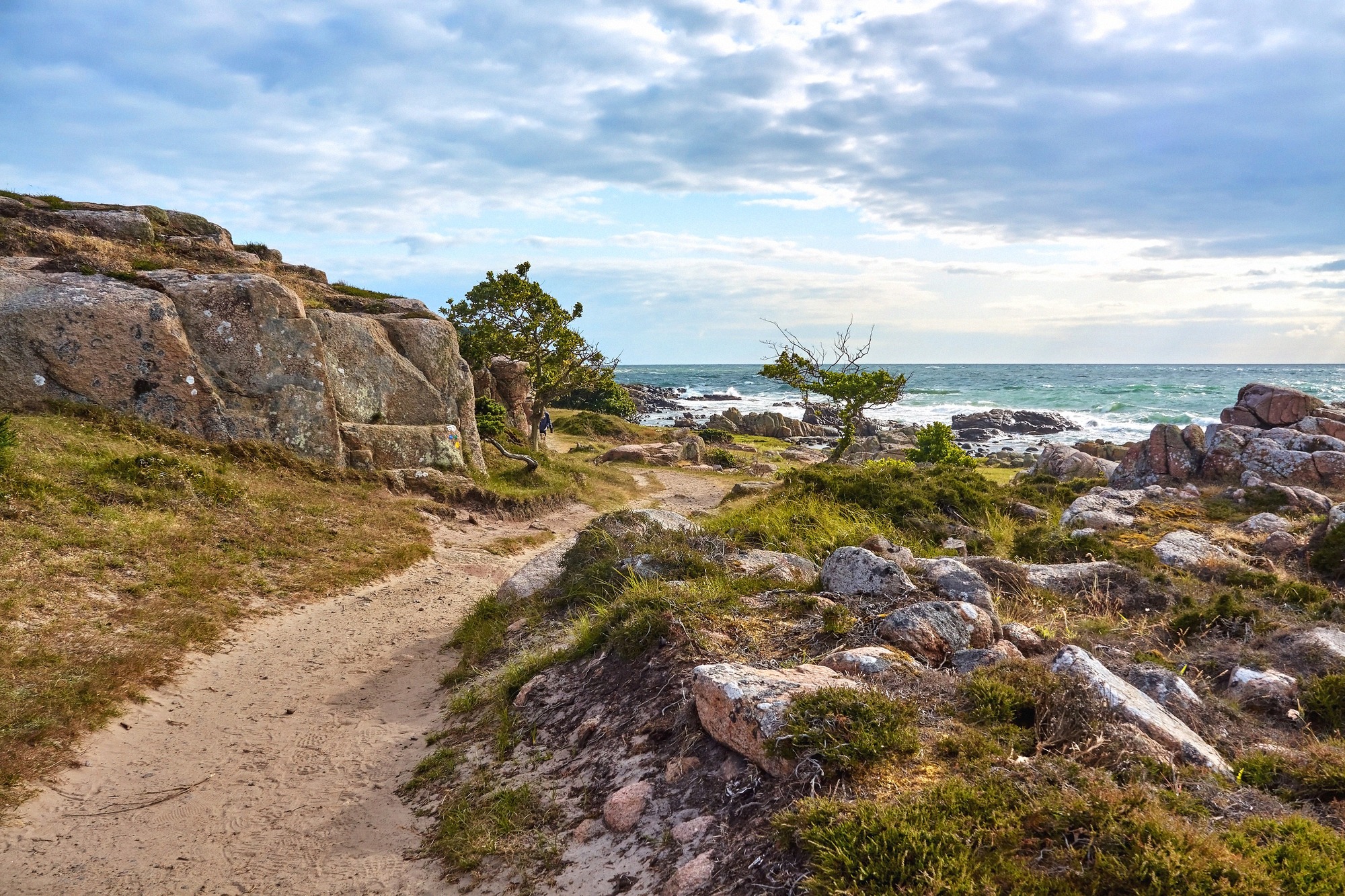
On foot, Bornholm opens up along two waymarked long-distance trails. The coastal path Kyststien circles the entire island over roughly 120 km, usually walked in four to seven stages across four to five days, passing Hammershus, the Helligdomsklipperne cliffs, Jons Kapel and the Svaneke lighthouse. Crossing the island instead is the Højlyngsstien (heath path): 67 km from Hammerknuden through Almindingen to the Paradisbakkerne. Both trails are open to everyone and free to walk, as is running and beach running.
For shorter outings or training runs, these sections work well:
Runners who want to make running the focus of their trip, including island events like Etape Bornholm and the Salomon Hammer Trail, will find the right pointers in the guide Running on Bornholm.
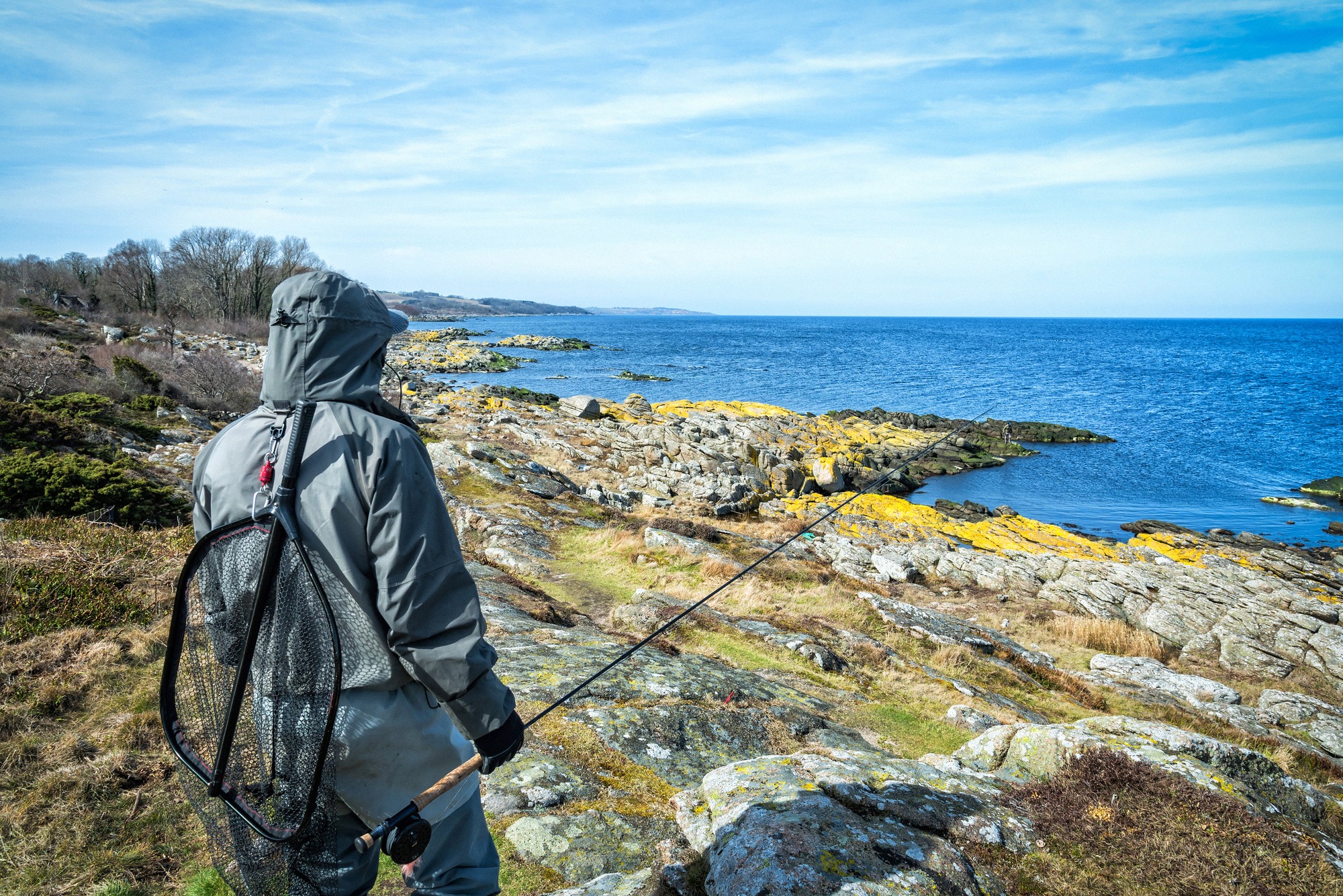
Bornholm ranks among Europe's best sea trout spots and has its own self-sustaining sea trout stocks. Along the coast, depending on the season, you can catch herring, garfish, sea trout, cod and flatfish; the best coastal fishing runs from mid-November to around midsummer. A closed season for coloured sea trout applies from 16 September to 28 February. In the lakes and inland waters, pike, perch, trout, pikeperch, eel, roach and tench are on the list; SportDres Bornholm and Check Point Marine are recommended tackle shops.
You'll need the Danish state fishing licence (fisketegn), bookable at fisketegn.dk. In 2026 it costs 46 DKK for a day, 150 DKK for a week and 214 DKK for a year. Pure put-and-take lakes are exempt, as are anglers under 18 or 65 and over, who can fish in the sea for free. If you'd rather go out with a guide, Bornholm Fishing Guide (bornholmfiskeguide.dk, tel. +45 3027 7848) offers trips: a half day (approx. 4 hrs) costs around 2,000 DKK, a full day (approx. 8 hrs) around 3,000 DKK, each for one to four people, with sea trout, turbot and garfish among the target species, plus cod when fishing from a boat. Bring your own gear and transport. A full breakdown of the fishing grounds is in the guide Fishing on Bornholm.
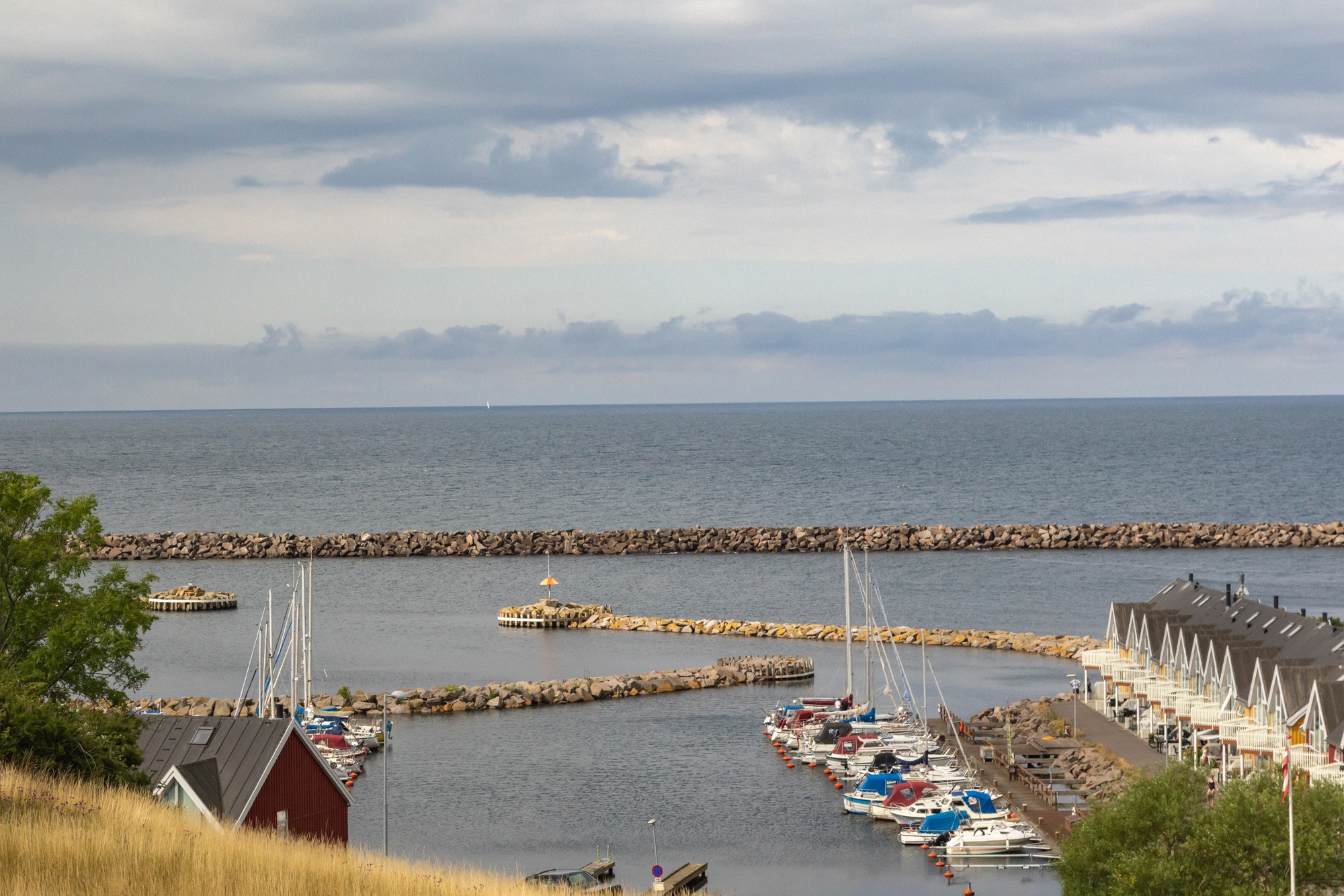
Bornholm is a popular summer sailing destination. Together with Christiansø, the island has 27 harbours, from the large ports at Rønne and Nexø to small, blasted-out rock coves. About 10 nautical miles to the north lies Christiansø, with its sheltered natural harbour between Christiansø and Frederiksø. Harbour fees are based on boat length: under 7 m pays 175 DKK a night, 7 to 10 m pays 273 DKK, 10 to 13 m pays 343 DKK, 13 to 16 m pays 440 DKK, and above that up to 1,090 DKK, power, water and showers included. In peak season, though, berths at the smaller marinas fill up fast. Official sources don't pin down a specific best sailing month, the season is clearly centred on summer. For more on the cruising grounds, harbours and passages, see the guide Sailing on Bornholm.
For wind and wave sports, Surf Bornholm is the island's only internationally certified surf school, accredited by the WWS and the Dansk Sejlunion. It runs windsurfing courses (usually three days, sometimes two), hires out windsurfing gear with sails from 1.5 to 7.8 m², plus SUPs and kites, with accommodation available on request. The school doesn't publish a public price list for courses; a direct enquiry is the way to go.
For something calmer, hire a stand-up paddleboard. Eastwind Watersports runs SUP outings from Hammerhavn and at Balka Beach; a board with paddle costs 125 DKK for an hour or 400 DKK for three hours, with a wetsuit charged separately. The flat, sheltered bays in the south suit beginners well, while the more exposed north coast is better left to experienced paddlers.
Most visitors come between May and September, the main season for cycling, beaches and watersports, when smokehouses and seasonal restaurants are fully open. Travel in winter (December to February) and expect many smokehouses and seasonal businesses to be closed, with daylight already fading by around 16:00. In exchange, holiday homes are considerably cheaper, one example price sits around 3,000 DKK a week, and Hammershus can be enjoyed without the crowds.
For budgeting, it helps to separate what's free from what isn't: hiking, running, beach running and the fenced dog-exercise woods cost nothing, and neither does sea fishing for under-18s and over-65s. You pay for bike hire (from around 60-75 DKK/day), the fishing licence (day 46, week 150, year 214 DKK), harbour fees (from 175 DKK/night) and SUP hire (from 125 DKK/hr). If you want to combine the cycle route with some culture, budget 100 DKK admission for the Bornholm Art Museum above the Helligdomsklipperne cliffs (free under 18); the tower museum on Christiansø costs 40 DKK (children 6-15, 20 DKK). There's no combined activity or discount ticket for the island's attractions; every activity is booked separately.